According to SNWR, more than a year after the activists were arrested, the prosecution has failed to present “single credible evidence” to support claims of treason and attempt to “wage war against the state.”
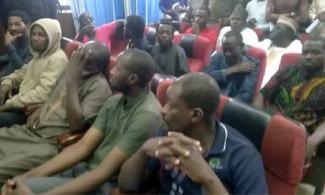
The Solidarity Network for Workers’ Rights (SNWR) has issued a fresh public alert ahead of the December 10, 2025 court sitting in the ongoing trial of the 11 young activists arrested during the #EndBadGovernance demonstrations.
It described the prosecution as a “state-orchestrated witch-hunt to silence dissent.”
In a statement signed by its coordinator, Daniel Akande, and released on Friday, the group accused the Nigerian authorities of weaponising the judiciary to suppress legitimate demands over hunger, inflation, insecurity, and mass poverty.
According to SNWR, more than a year after the activists were arrested, the prosecution has failed to present “single credible evidence” to support claims of treason and attempt to “wage war against the state.”
Akande, who is also one of the defendants in the case, alleged that he was abducted from a worship location and later “framed into a treasonable felony charge he knew nothing about.”
He maintained that the arrests were aimed at intimidating young Nigerians and discouraging organised resistance against what he called “anti-people governance and worsening economic hardship under President Bola Tinubu.”
SNWR further argued that repeated adjournments and procedural inconsistencies have exposed the trial as a political project rather than a judicial process.
“The government is not interested in truth or justice; it is only desperate to make examples of activists to frighten the public into silence,” the organisation said.
The group also took aim at the lead prosecutor in the matter, describing him as “a compromised legal actor currently facing internal investigations for abuse of office, age falsification, and mismanagement.”
SNWR noted that this development “completely undermines the credibility of the trial and exposes the political nature of the charges.”
Rather than confront Nigeria’s rapidly worsening economic and security crises, the organisation accused the Tinubu administration of turning its energy against protesters and critics.
The statement said daily life has become unbearable for millions as inflation, unemployment, mass hunger, forced migration, and violent crimes continue to escalate nationwide.
According to SNWR, rising anger within some segments of the security architecture— even among uniformed personnel —reflects “a broad collapse of public confidence” in the administration’s leadership.
“The ruling class has chosen repression over reform. Instead of addressing hunger, joblessness and insecurity, it has unleashed arrests, intimidation, media attacks and selective prosecution,” the group warned.
SNWR insisted that the crisis confronting the country is structural and rooted in elite control of national wealth.
It reiterated its socialist demand for public resources to be placed under democratic management by Nigerian workers, warning that Nigeria risks further destabilisation if neoliberal policies remain unchanged.
As the country moves toward the 2027 general elections, the organisation said the contradictions of the current system are “mounting and sharpening,” arguing that the conditions that birthed the #EndBadGovernance protests have worsened significantly.
“The masses are not only poorer, they are angrier — and the state’s response has been a total crackdown on dissent,” the statement added.
SNWR called for immediate dismissal of all charges against the Abuja 11 and unconditional release of all political detainees nationwide. It also urged labour unions, student bodies, human rights platforms, and global socialist networks to intensify pressure on the Nigerian state.
"We call on workers’ unions, students’ unions, civil society groups, international socialist and labour organizations, human rights bodies, journalists, and all people of conscience to rise in solidarity with the Abuja 11. Stand with them, amplify their case, and demand justice. An injury to one activist is an injury to all. The struggle continues until justice is won and Nigeria is truly liberated from the current shackles of capitalism,” the organisation declared.
The Abuja trial resumes on December 10 at the Federal High Court, where observers say attention will be focused on whether the court will finally entertain substantive arguments or extend yet another adjournment in the long-running case.