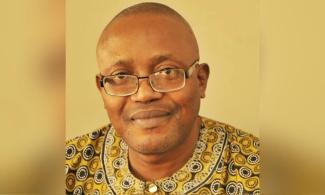
Umaro Mokhtar Sissoco Embalo on November 26, 2025 sat in his office as the President of Guinea-Bissau.
As a retired General, the 53-year-old knew when he was beaten. Three days earlier, he had succumbed to unbearable pressures that he allowed general elections to be held despite his fears. His tenure had expired on February 27, 2025.
Rather than hold elections in accordance with the constitution, he had it postponed. The Constitutional Court had come to his aid by setting September 4, 2025 as the new date for his departure or mandate renewal. The seven-month extension had seemed a long way off. But like the debtor who sets the month end for him to pay his debts, the payment day soon came, finding him like a cornered rat. He finally agreed to hold the election in November.
He had in his five years as President tried to prepare for a possible re-election.
Amongst a number of repressive measures, he had twice proscribed the parliament, the National Peoples’ Assembly, NPA, because it was controlled by the opposition African Party for the Independence of Guinea and Cape Verde, PAIGC. That was the party that led the country through the liberation struggles and won its independence. Embalo had joined the PAIGC in 2016 and was later that year appointed the Prime Minister under President Jose Mario Vaz.
But two years later, amidst disagreements, he left the PAIGC to establish the Madem G15 party.
He was declared winner of the disputed November 2019 elections and sworn in as President in February 2020. However, despite his best efforts, the PAIGC maintained control of parliament and, as it turned out, the support of the people. So he dissolved the parliament. But when new elections were conducted, the opposition PAIGC maintained control of the parliament. So, five months into the life of the new parliament, he again dissolved it unconstitutionally, and this time, refused to allow new elections.
He also moved against the judiciary, putting it under armed siege, and forced the Chief Justice out. But these seem to make the PAIGC stronger. So, when the presidential election became inevitable, he banned the PAIGC and its candidate. But rather than fight the bans, the PAIGC decided to adopt the Independent candidate, Fernando Diaz da Costa.
Embalo might have thought he would have a walkover, but now, the election results starring him in the face, showed he had lost.
However, he was not the only person who had the results, the opposition also had them. Worse still, the international observers, like those of the African Union Election Observation Mission led by former Mozambican President Filipe Nyusi, also had them. Also, the observers of the West African Elders Forum, WAEF, led by Dr Goodluck Jonathan, former President of Nigeria, equally had the results.
I interviewed a leader of the opposition and asked him how they came to the conclusion they had won the election even when the electoral commission had not made a formal announcement. He explained: “On each of the voting table, there are representatives of the candidates, Electoral Commission, Public Ministry, judicial police and election observers. Votes were counted manually and in public view.
These were entered into the tally sheet and the representatives signed. People present, like the representatives, took photographs of the signed tally sheet. There are a total of 4,000 voting tables. Then you have diaspora voting. These results were then taken to the regional electoral centres and tallied with the few diaspora voting which took place in a handful of countries, including a total of six countries in West Africa. So, the representatives and observers have photocopies or photographs of the result sheets and these are what showed that we won the election.”
A fundamental pre-election agreement between the opposition candidate Fernando Diaz and the PAIGC is that if he wins, parliament will be reconvened and all unconstitutional decisions will be reversed.
Embalo knew that with his loss of the election, he might be moving from the presidential office to prison. If he fled, Diaz will be sworn in and, if he resigns, constitutionally, the person who will replace him is the President of the National Assembly who is the leader of the PAIGC.
Given the fact that he has limited options, he decided to execute a childish prank. He phoned the media to announce that he was being overthrown. He continued to give interviews, including that he was being moved to the headquarters of the Armed Forces General Staff.
Then, the head of his presidential guard, General Denis N’Canha, announced a coup which he claimed was being carried out to stop politicians allied to an unnamed drug baron from taking over the country. But, why would anybody execute a coup against an opposition candidate who had allegedly lost the elections?
His Excellency Jonathan who was on ground, gave a graphic presentation of the events in Guinea-Bissau: “I wouldn’t call it a coup. It was not a coup. I would just say, for want of a better word, maybe it was a ceremonial coup. Because for two things: It is the president, President Embaló, who announced the coup. Later, the military men came up to address the world that they were in charge of everywhere.
“Then Embaló had already announced the coup, which is strange. Not only announcing the coup, but Embaló, while the coup took place, was using his phone and addressing media organisations across the world that he had been arrested.
“The military doesn’t take over governments, and the sitting president that they overthrew would be allowed to be addressing press conferences and announcing that he has been arrested. Why does this happen? Who is fooling whom?”
The next day, the alleged coup plotters who turned out to be loyal to Embalo, sent their boss to Senegal while announcing that they would be in power for one year. Senegal found out that it had been fooled by Embalo. Its Prime Minister Ousmane Sonko said the so-called coup was a “sham”. Given the fact that his cover had been blown, Embalo fled Senegal and was last heard about in the Democratic Republic of Congo.
Nigeria has done very well by giving President-elect Dias asylum in its embassy in Bissau, and invited the regional Economic Community of West African States, ECOWAS, military, stationed in the country, to provide extra security for him.
The next step should be that the coup plotters in Bissau, be ordered to step down and allow resumption of constitutional rule. This was what Nigeria and ECOWAS did in Gambia in the case of Yahaya Jammeh in 2017.
As for Embalo, he needs to be returned to Guinea-Bissau and tried for crimes against the country, including for treason.