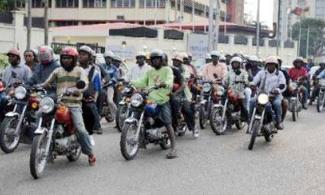
Drivers say the policy amounts to an outright ban without alternatives, warning it could plunge over 200,000 households into poverty.
Tension is rising across Enugu State as more than 40,000 commercial drivers, including tricycle (keke) operators, Yellow Buses and mini-bus drivers, brace for a confrontation with the state government over a sweeping plan to restrict their operations across major city routes to pave the way for a government-backed Bus Rapid Transit (BRT) system.
Drivers say the policy amounts to an outright ban without alternatives, warning it could plunge over 200,000 households into poverty.
The government insists the reform is necessary to modernise transportation — but drivers accuse officials of forcing them off the roads to benefit politically connected private investors.
“We are not against new buses,” said Michael Chieze, a commercial driver. “But the governor wants to drive us out of business with no alternative. How will we feed our families?”
At a consultative meeting on Monday, Commissioner for Transport Dr. Obi Ozor unveiled a list of major corridors to become exclusive BRT routes.
These include: "Okpara Avenue–Abakaliki Road–New Haven Junction–Naira Triangle–Emene Airport; Ogui Road–Chime Avenue–Naira Triangle; New Haven Junction–Bisala Road–Rangers Avenue–WAEC–Nkpokiti–Zik’s Avenue and Ogui Road–Presidential Road–WAEC–Nkpokiti. All of Agbani Road."
With nearly every major road included, drivers say the implications are clear: "Only government-approved BRT buses—allegedly controlled by the governor’s allies—will operate along city routes."
Commercial operators who spoke to SaharaReporters argued that the restrictions will push them entirely off the road, despite the government claiming they will “reorganize” rather than displace workers.
“If you remove us from all these routes, what is left?” asked tricycle operator Okeke Edeh. “There are 18,000 keke riders in Enugu. Where do you expect them to go?”
Drivers accuse the government of prioritising private concessions over the livelihoods of ordinary citizens.
Another driver, Chimezie Kingsley, added: “The government has brought a company—one of their fronts—to take over all routes. They paid them billions, and now we must suffer. It is wicked.”
Dr. Ozor revealed that the state has procured: 200 CNG-powered BRT buses, and 4,000 electric taxis to be assembled at ANAMMCO in Enugu, with 1,000 expected in three months.
He also showcased: 84 new bus shelters, a smart central monitoring system, and an electronic Ije Card payment system to be distributed across the state.
“This reform is not about taking anyone’s job,” Ozor insisted. “BRT buses will operate primaries routes, yellow buses secondary routes, and tricycles last-mile services. Everyone has a place.”
But drivers strongly disagree. “How can we have a place when you have taken every major road? This is not reorganization—this is displacement,” said one mini-bus driver who gave his name simply as Obinna.
Meanwhile, commercial operators say they are already overstretched by steep tax increases: "Daily taxes jumped from ₦350 to ₦1,000; ₦10,000 for emblems; ₦10,000 for biometric registration (paid twice across administrations); ₦1,000 for MOT number and extra ₦200 “park and pay” fines."
“Drivers are paying through their noses,” said Nwakpa Celestine. “And after taxing us to death, they now want to ban us.”
Operators say parliaments of drivers support families of 3–5 people each, meaning the policy could affect over 200,000 residents.
Although some union heads publicly endorsed the government’s plan, many drivers say they did so under pressure.
RTEAN Chairman, Comrade Chidiebere Aniagu, who previously opposed the ban, now backs it — but sources say he did so reluctantly.
“We only ask that our members be employed in the new scheme and the government buys our vehicles,” Aniagu was quoted to have said.
Commercial drivers say the government must build separate BRT corridors, not seize existing roads.
“Enugu roads were never built for specialised buses,” said a group of bus operators. “If they want a BRT, let them build new lanes. Don’t destroy our livelihood.”
Many accuse the state of planning an anti-poor policy disguised as modernization.
The Commissioner has inaugurated a review committee of government and transport union representatives, but drivers say they will continue to resist until there is a clear guarantee that "they will not be forced out, their jobs are secured, and they can coexist with the BRT buses."
The launch date for the BRT system is expected soon — and unless compromises emerge, a major confrontation may be unavoidable.