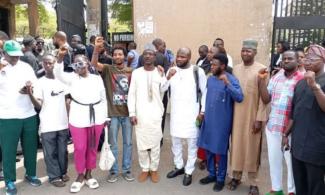
The judge’s decision, described by activist, Adaramoye Michael Lenin as a “historic victory,” resulted in the full acquittal of the accused, who had been detained and prosecuted for allegedly participating in what security agencies previously labelled as a threat to national security.
Justice Emeka Nwite of the Federal High Court, Abuja on Wednesday delivered a landmark ruling after striking out all treason and terrorism-related charges filed against 11 protesters arrested during the August 2014 #EndBadGovernance protests.
The judge’s decision, described by activist, Adaramoye Michael Lenin as a “historic victory,” resulted in the full acquittal of the accused, who had been detained and prosecuted for allegedly participating in what security agencies previously labelled as a threat to national security.

Announcing the outcome shortly after the ruling, Lenin wrote on his Facebook page: “Historic victory today! Justice Emeka Nwite struck out the treason and terrorism charges against 11 Endbadgovernance protesters and acquitted all of us.”
Background
The #EndBadGovernance demonstrations, which erupted in several Nigerian cities in August 2024, were driven by public frustration over rising insecurity, economic hardship, inflation, and concerns about governance and accountability.
The activists were arrested while exercising their right to peaceful protest against worsening economic hardship under President Bola Ahmed Tinubu's administration.
The movement drew parallels to earlier civic uprisings, especially the 2020 #EndSARS protests.
During the height of the demonstrations, security agencies arrested multiple participants, accusing some of attempting to destabilise the state.
Eleven protesters namely Adaramoye Micheal Lenin, Daniel Akande, Mosiu Sodeeq, Adeyemi Abayomi, Suleiman Yakubu, Opaluwa Elego Simeon, Angel Love Innocent, Buhari Lawal, Basir Bello, Nurudeen Khamis, and Abdulsalam Zubairu, were later charged with treasonable felony, unlawful assembly, and alleged links to terrorist activities.
Civil society groups described the charges as politically motivated.
Human rights organisations condemned the detentions as an attempt to criminalise dissent. Several groups, including legal advocacy networks, pressured authorities to drop what they called “baseless and oppressive charges.”