
According to a report released by a civic tech organisation, MonITNG, on Wednesday, December 10, 2025, N4.3 billion was allocated for the project awarded to Logine International Limited.
The construction of a 20-kilometre inner township intervention road in the Coker Agule/Itire Ikate/Surulere area of Lagos State has remained abandoned despite over N6 billion paid to the contractor between July and August 2024.
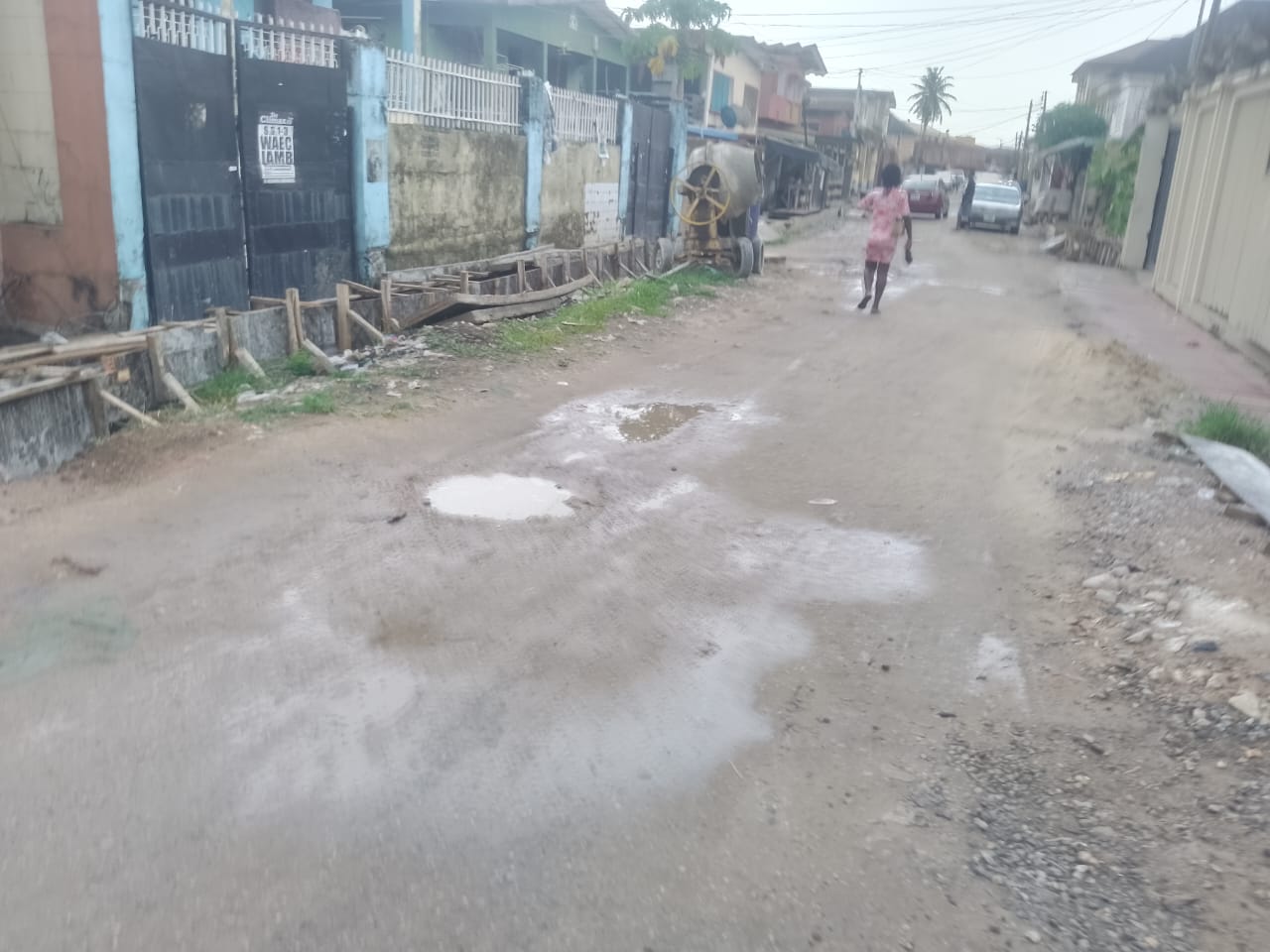
According to a report released by a civic tech organisation, MonITNG, on Wednesday, December 10, 2025, N4.3 billion was allocated for the project awarded to Logine International Limited.
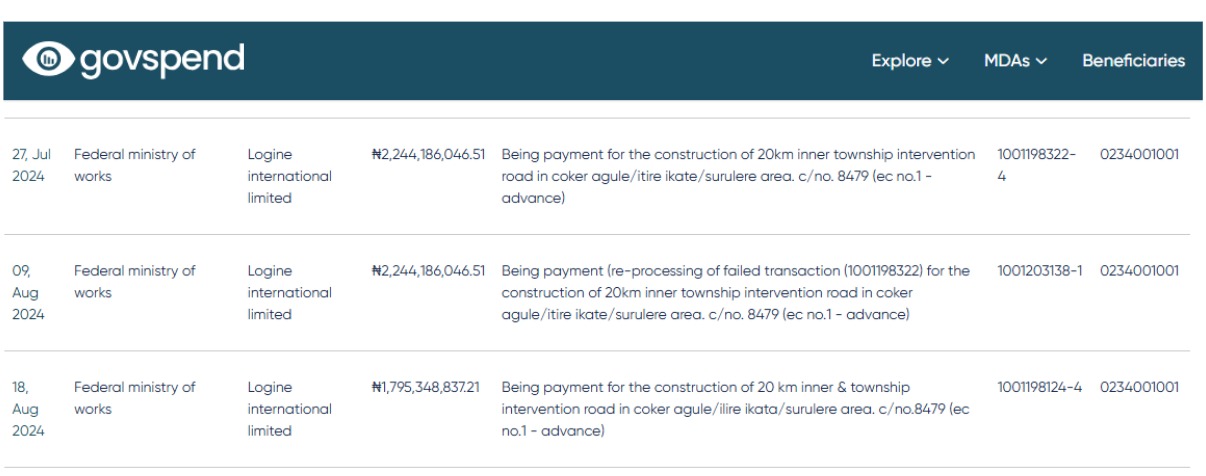
MonITNG noted that a Tracka team has been monitoring the project closely and has discovered that the road has been abandoned despite the sum of N6,283,720,930.23 released to the contractor, as confirmed on BudgIT Foundation’s GovSpend platform.
Logine International Limited was awarded the contract, but according to the report, the contractor has failed to complete the work or return to the project sites.
“For over a year, Logine International Limited, the contractor assigned to construct roads in the Coker Aguda, Itire Ikate, and Surulere areas, has failed to return to project sites at Shaki Crescent and Akinyele communities under Itire-Ikate LCDA,” MonITNG stated.
MonITNG said the funds were disbursed between July and August 2024, yet communities affected by the project continue to grapple with deplorable road conditions, uncompleted drainage systems and daily hardship.
“The sum of ₦4.03bn was disbursed between July and August 2024, yet the communities remain with deplorable roads, uncompleted drainages, and daily hardship,” the report noted.
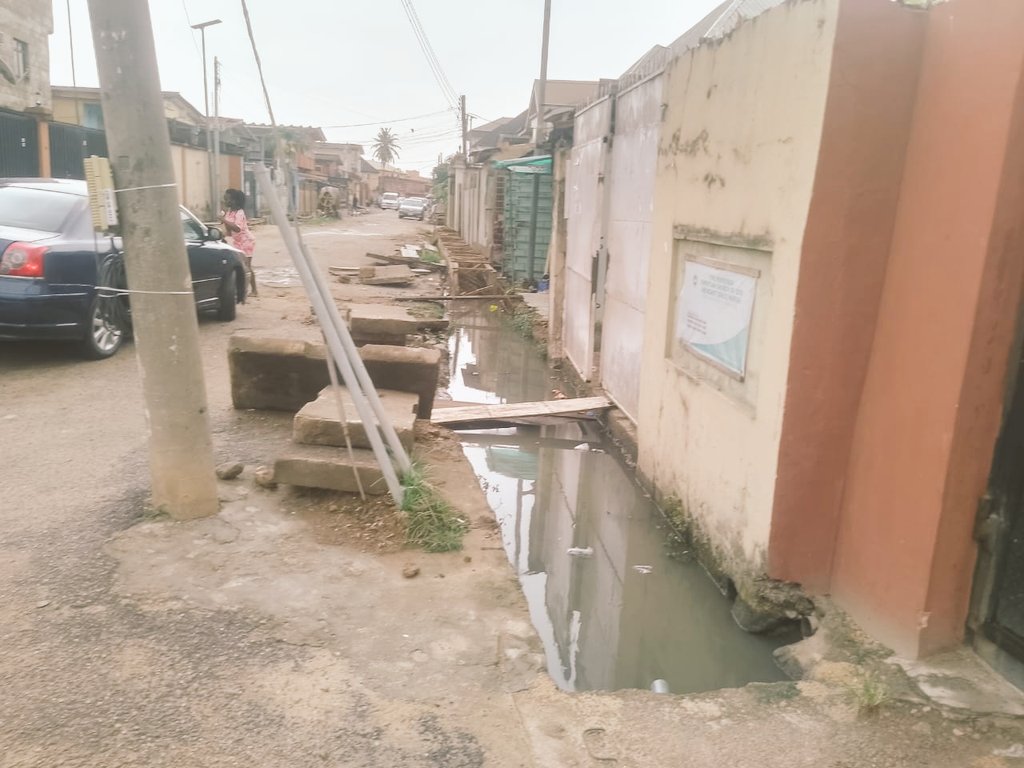
According to the payment details on GovSpend, on July 27, 2024, the Federal Ministry of Works paid the sum of N2,244,186,046.51 to the contractor with the MDAs code:1001198322-4 and beneficiaries code: 0234001001.
On August 9, 2024, the Federal Ministry of Works made another payment of N2,244,186,046.51 to Logine International Limited with the MDAs code: 1001203138-1 and beneficiaries code: 0234001001, for the same project.
On August 18, 2024, the Federal Ministry of Works also paid the sum of N1, 795,348,837.21 with the MDA's code: 1001198124-4 and beneficiaries code: 0234001001, to the same contractor for the same project.
However, MonITNG said that residents of the area confirmed that the contractor had not been seen on site since December 2024.
“Our checks this morning confirm that residents have not seen the contractor on site since December 2024,” MonITNG stated.
“Funds were budgeted, approved, and released, but the project remains incomplete, leaving the people to suffer needlessly.”
The organisation criticised the supervising ministry and agency, the Federal Ministry of Works, for alleged lapses in oversight.
“The supervising ministry and agency, the Federal Ministry of Works, have a duty to ensure that contractors begin and complete projects once funds are released.
“Timely follow-up and oversight are essential to avoid abandonment and to ensure that public resources deliver the intended benefits,” it said.
MonITNG also called on anti-corruption agencies, including the Independent Corrupt Practices and Other Related Offences Commission (ICPC) and the Economic and Financial Crimes Commission (EFCC), to intervene in the matter.
“We are calling on ICPC and EFCC to urgently engage with the ministry and agency to investigate why the funds were disbursed but not utilised for the purpose intended,” MonITNG stated.
Emphasising the need for accountability, MonITNG said residents of the affected areas deserve functional roads and proper drainage, warning that project delays undermine public trust and violate principles of good governance.
“Accountability must be enforced, and those responsible for the abandonment must be held answerable.
“Residents of these areas deserve functional roads and proper drainage. Public funds must serve the people, not leave communities in disarray,” the report stated.
According to MonITNG, the delay in project execution undermines public trust and violates the principles of good governance.
“This is an urgent call for action: the contractor must return to the site, the supervising ministry must enforce compliance, and anti-corruption agencies must ensure that funds allocated for public projects are spent as intended,” MonITNG stressed.