The purported efforts reportedly included convincing the aide to withdraw as a court witness and to stop further public disclosures in exchange for the return of seized properties and the withdrawal of criminal charges.
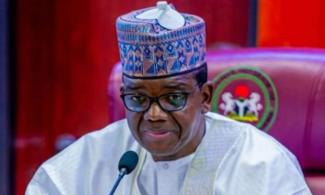
Fresh controversy has emerged surrounding Nigeria’s Minister of State for Defence, Bello Mohammed Matawalle, following reports that an alleged emissary acting on his behalf sought to pressure a former aide into retracting damaging allegations.
The purported efforts reportedly included convincing the aide to withdraw as a court witness and to stop further public disclosures in exchange for the return of seized properties and the withdrawal of criminal charges.
A voice note obtained by SaharaReporters implicates Dr. Sulaiman Shinkafi, a former Zamfara State official and aide to ex-Governor Matawalle, in what appears to be a coordinated attempt to persuade Musa Kamarawa, a former Senior Special Assistant (SSA) to the minister, to reverse his earlier claims against Matawalle.
In the recorded conversation, Dr. Shinkafi is heard pleading with Kamarawa to “understand the matter properly,” assuring him that all charges against him would be dropped and that his confiscated properties would be returned if he agreed to recant his statements and disengage from ongoing legal processes.
“I just spoke with the Minister and reached an understanding,” Shinkafi told Kamarawa in the audio.
“They have given us time and discussions have been held. We will go and collect your belongings quickly. The barrister will handle the talking… A committee has been set up and someone has been assigned.”
According to the recording, Shinkafi repeatedly invoked religious oaths to reinforce his assurances, promising that Kamarawa would be compensated and that “everything that belongs to you… will be returned to you.”
“All your charges, by God and the Prophet, will be removed,” he said. “Wallahi, tallahi, billahi, you will get it.”
Kamarawa, who recorded the conversation, declined the offer, insisting he would not cooperate with any arrangement that required him to retract his claims or appear alongside the minister.
“No, Baba, wallahi I will not come. Don’t worry,” Kamarawa responded at one point in the exchange.
Despite Kamarawa’s refusal, Shinkafi persisted, assuring him that nothing harmful would happen and that the outcome would “benefit” him if he acted “wisely.”
“We are not backing down. I won’t stop until I see him,” Shinkafi said, referring to further discussions with the minister.https://x.com/musa_kiliya/status/2000321891098308631?s=20
“My heart is with you to the end," Kamarawa said.
The revelations have further intensified scrutiny around Matawalle, who has been at the centre of long-running allegations linking political authorities in Zamfara State to controversial “peace deals” with armed groups during the height of banditry and mass killings in the North-West.
Meanwhile, Sheikh Murtala Asada, a prominent northern Islamic cleric and outspoken critic of Matawalle, has repeatedly accused the minister of complicity in insecurity and of obstructing investigations into the alleged sponsorship of armed groups.
In a video obtained by SaharaReporters, Asada said the allegations against Matawalle were so serious that, in more accountable societies, the minister would have stepped aside voluntarily.
“In other countries, when leaders are accused of such things, they voluntarily step aside out of shame,” Asada said.
“But here, it is shocking that a junior Minister of Security, who once wore short trousers, is now a former Commissioner for Security.”
Asada insisted that none of the allegations he raised against Matawalle had been credibly refuted.
“Before God, the Security Commissioner has denied nothing that I accused him of,” he said. “Not a single allegation has been disproved. None of what I said has been denied with facts.”
The cleric accused the minister of obstructing investigations into insecurity-related crimes, claiming that as much as 70 percent of inquiries that could have shed light on banditry financing were blocked.
“I was gathering evidence; videos, houses, vehicles, but suddenly progress was blocked,” Asada alleged.
“Cases are taken to court, but they are stalled. Committees are announced but never allowed to function.”
Central to Asada’s claims is the allegation that armed groups and their intermediaries were rewarded with houses, vehicles, and cash under the guise of “peace deals,” a policy he described as both immoral and dangerous.
“There is no Islam in terrorism,” he said. “These peace agreements only strengthen criminals.”
Asada named Musa Kamarawa as one of the key figures allegedly linked to ransom negotiations, stolen cattle transactions, and large sums of money.
According to him, the figures ran into tens of millions of naira.
He alleged that victims were forced to pay to recover stolen livestock, while investigations into these claims were never pursued to a conclusion.
Kamarawa’s arrest and the subsequent seizure of his assets, Asada argued, were designed to neutralize a critical witness.
“He said he would go to court and testify,” Asada noted. “Then he was arrested, and everything found with him; cars, money, property, was quietly removed.”
Asada also disputed claims by the minister that weapons displayed publicly were recovered through peace negotiations, insisting that available evidence contradicted that narrative.
The cleric rejected suggestions that his campaign was politically motivated, stating that many powerful politicians, including those once aligned with former President Muhammadu Buhari, had turned against Matawalle only after the scale of the allegations became difficult to ignore.
“When President Buhari said some states were funding bandits, senior APC figures rushed to defend themselves because they knew the truth was close,” Asada said, adding that fear, not ideology, drove subsequent political realignments.
He maintained that he was acting out of conscience, not sponsorship, and vowed that the truth would eventually emerge if the matter reached a fair court.
“If the case goes before a fair court, the truth will be established,” Asada said. “What God has destined will surely happen. No thief can stop what God has decreed.”
The speech concluded with prayers calling for the exposure of those sponsoring violence, an end to terrorism, and justice for victims of insecurity. Drawing on Qur’anic references to Pharaoh, Haman, and Qarun, Asada warned that arrogance and oppression inevitably end in disgrace.