This is as he cautioned the Nigerian government against capitulating to what he described as Aliko Dangote’s “blackmail” for monopoly control of Nigeria’s oil sector.
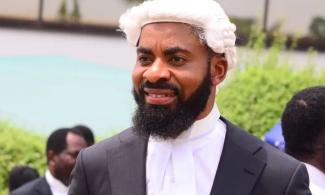
Human rights lawyer, Deji Adeyanju, has called on anti-corruption agencies to urgently investigate allegations surrounding the Chief Executive Officer of the Nigerian Midstream and Downstream Petroleum Regulatory Authority (NMDPRA), Farouk Ahmed.
This is as he cautioned the Nigerian government against capitulating to what he described as Aliko Dangote’s “blackmail” for monopoly control of Nigeria’s oil sector.
Adeyanju’s intervention comes amid an escalating public dispute between Africa’s richest man, Aliko Dangote, and the leadership of the NMDPRA, an altercation that has further exposed deep-seated fault lines within Nigeria’s petroleum industry.
In a statement made available to SaharaReporters, Adeyanju urged agencies such as the EFCC and ICPC to investigate allegations that Farouk Ahmed allegedly spent about $5 million on his children’s secondary school education in Switzerland.
“If true, there is no credible explanation as to how such an expense could be lawfully sustained on earnings from public service,” Adeyanju said, stressing that the allegation raises serious questions about integrity and accountability within the regulatory framework of Nigeria’s oil sector.
However, the activist was quick to distance the controversy from any notion that Dangote is acting as a public-spirited reformer.
“I must quickly point out that the controversy before us is not evidence that Aliko Dangote has suddenly become a social crusader acting in the interest of the nation,” Adeyanju stated. “This dispute is about market control and monopoly.”
According to him, Dangote’s frustration is not with regulation itself, but with regulatory oversight that prevents him from dominating a sector he only recently entered through his massive Ibeju-Lekki refinery project.
“The Federal Government must therefore resist the temptation to collapse state authority under the weight of public sentiment or economic blackmail. The government must stand firmly behind its regulators, provided they act within the law,” Adeyanju warned, adding that regulators should be protected as long as they operate within the law.
He reminded the government that Nigeria’s petroleum sector is governed by the Petroleum Industry Act (PIA), which was deliberately structured to promote a willing buyer–willing seller system and a competitive free market, not private sector absolutism.
“Dangote’s posture, unfortunately, appears hostile to this,” he said.
Adeyanju also questioned the pricing of fuel products refined locally by the Dangote Refinery, arguing that it defies logic for petrol refined in Ibeju-Lekki to be more expensive than fuel imported from distant countries like Argentina or Brazil.
“If Dangote genuinely desires that the importation of fuel should reduce and expects Nigerians to patronize locally refined products, he should lower his prices,” he said.
He further noted that there have been contestable but widespread allegations by multiple users that some of the refinery’s petroleum products are sub-standard—claims that, he said, deserve regulatory scrutiny rather than political pressure.
“No one compelled Dangote to build a single-line refinery of this scale,” Adeyanju added.
“Investment decisions carry risk, and the burden of those risks cannot be transferred to Nigerians through higher prices or reduced choice simply because investors must be paid. Patriotism does not mean Nigerians should buy less and pay more for products produced locally.”
According to him, patriotism should not be weaponised to force Nigerians to “buy less and pay more” simply because products are locally produced.
In a final warning, Adeyanju revealed that the clash between Dangote and Farouk Ahmed is not new but part of a long-running battle behind the scenes. He called on the Federal Government to launch a holistic investigation into the entire controversy.
“The Federal Government ought to conduct a holistic investigation into the entire controversy to examine not only allegations against the regulator, but also whether bribes were offered and refused,” he said.