Osigwe warned that allowing senior public officials to quietly exit office without accountability weakens institutions and entrenches a culture of impunity.
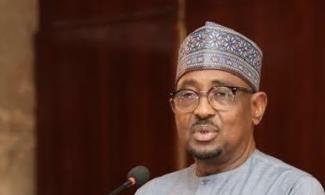
The Nigerian Bar Association (NBA) has reacted to the resignation of the Chief Executive Officer of the Nigerian Midstream and Downstream Petroleum Regulatory Authority (NMDPRA), Farouk Ahmed, insisting that the allegations of corruption against him must be investigated despite his resignation.
The NBA President, Afam Osigwe (SAN), who stated this, noted that serious corruption allegations such as forgery and false asset declarations must be thoroughly investigated and should not end merely with a public officer stepping aside.
Osigwe warned that allowing senior public officials to quietly exit office without accountability weakens institutions and entrenches a culture of impunity.
The NBA president, who gave the warning during an interview on Arise News TV, stressed that resignation does not amount to exoneration and should not be treated as closure where grave allegations have been raised.
“Allegations of this nature are too weighty to be used merely as tools for political expediency or administrative convenience.
"Once such claims are made, there is a public duty to investigate them to their logical conclusion, either to clear the individual’s name or to establish guilt based on credible evidence,” Osigwe said.
He added, “We have said this before in similar cases. When weighty allegations such as forgery or false declarations are raised, there ought to be an investigation. People should present documents, and where others are complicit, they too should be held accountable.”
Osigwe cautioned against a recurring pattern in which allegations emerge, a resignation follows, and public interest fades without any transparent or conclusive inquiry.
According to him, such an approach creates the impression that allegations are weaponised simply to remove someone from office, after which no genuine effort is made to uncover the truth.
He emphasised that accountability processes must be driven by a sincere desire to uphold the rule of law, not by political manoeuvring or attempts to gain advantage in regulatory or commercial disputes.
Politicising serious accusations, Osigwe warned, reduces them to power plays and undermines public confidence in governance and the justice system.
While declining to take sides in the specific controversy between the NMDPRA and the Dangote Group, Osigwe noted that perceptions of corruption could sometimes be as damaging as proven misconduct, making it all the more important for allegations to be properly examined.
Failure to investigate, he said, harms not only the individuals involved but also the credibility of public institutions.
“Building strong institutions requires consistency, transparency, and follow-through in handling allegations against public officers. This is how institutions are built and how we prevent such issues from recurring,” Osigwe said.
He maintained that Nigeria’s anti-corruption efforts would remain superficial unless allegations are followed by credible investigations and, where necessary, prosecution.
According to him, accountability must go beyond symbolic gestures to demonstrable outcomes that reassure citizens that no one is above the law.
Osigwe further warned that when allegations are allowed to die quietly with resignations, it sends a dangerous signal that public office can be vacated as a shield against scrutiny.
Such a message, he said, erodes deterrence and weakens the moral authority of institutions tasked with enforcing standards in public life.