
The facility, which is meant to serve thousands of residents within Uhuodo and surrounding communities, has been left to deteriorate for many years without any meaningful intervention by local, state, and federal governments.
Thousands of residents of the Uhuodo community in Okehi Local Government Area of Kogi State have been reportedly left without access to basic healthcare services as the only Primary Health Care (PHC) facility serving the area has remained locked, abandoned, and non-functional for over a decade, according to a new report.
The report, released by a civic tech organisation, MonITNG, after a recent visit to the community by the Tracka monitoring team, revealed what it described as a “deeply disturbing” state of affairs at the Uhuodo Primary Health Care Centre.
The facility, which is meant to serve thousands of residents within Uhuodo and surrounding communities, has been left to deteriorate for many years without any meaningful intervention by local, state, and federal governments.
According to the report, the Tracka team visited the community and discovered that the PHC, the sole healthcare centre available to residents, was completely abandoned and locked up, despite repeated government assurances that health remains its top priority.
“For more than a decade, the Uhuodo community has had no access to functional primary healthcare, despite repeated government claims that health and education are top priorities,” the report stated.
During the visit, the team observed that the PHC was in a severe state of disrepair, non-functional, and “clearly on the verge of collapse.”
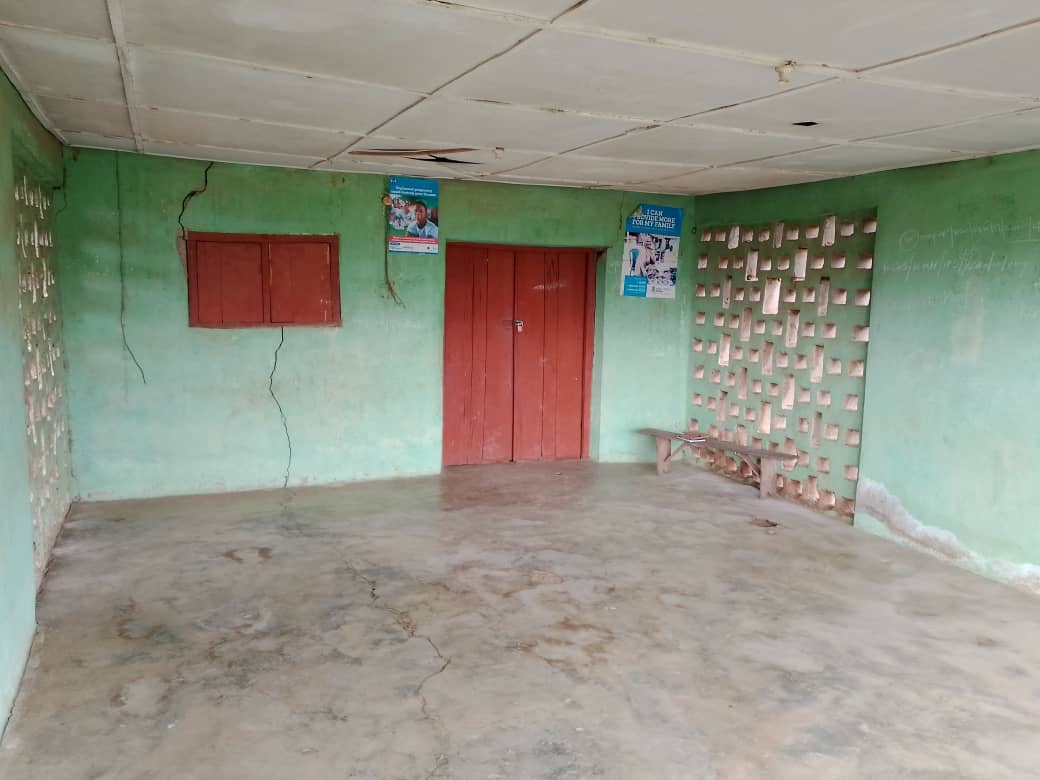
The structure showed visible signs of neglect, underscoring years of abandonment and the lack of maintenance.
The Officer-in-Charge of the facility told the Tracka team that several appeals had been made to relevant authorities and elected representatives for urgent intervention, but no concrete action had followed.
“The Officer-in-Charge informed the team that several appeals have been made to relevant authorities and elected representatives for intervention, yet no concrete action has been taken,” the report noted.
As a result, residents have stopped using the centre entirely.
Pregnant women, children, the elderly, and other vulnerable members of the community are now left without access to basic medical services, often forced to travel long distances or rely on unsafe alternatives for care, according to the report.
According to the report, the situation in Uhuodo comes against the backdrop of recent announcements by the Federal Ministry of Health on the release of ₦32.9 billion through the Basic Health Care Provision Fund (BHCPF) to strengthen Primary Health Centres and general hospitals across the country.
The report noted that while the amount appears significant, the report argued that sharing ₦32.9 billion among 36 states and the Federal Capital Territory is “grossly inadequate” to address the widespread decay in Nigeria’s healthcare infrastructure.
Across Nigeria, many PHCs and public hospitals remain in deplorable conditions, characterised by leaking roofs, broken beds, lack of essential drugs, shortages of health workers, unreliable electricity supply, and absence of clean water.
In some communities, the report noted that women still give birth on bare floors, while patients are compelled to purchase basic medical supplies before receiving treatment.
Reacting to the state of the Uhuodo PHC, MonITNG expressed concern over what it described as a widening gap between policy pronouncements and the lived realities of Nigerians.
“These realities expose the widening gap between policy announcements and the everyday experiences of Nigerians,” MonITNG said.
“Despite repeated budgetary allocations and reform narratives, many communities like Uhuodo continue to suffer neglect, abandonment, and systemic failure in basic healthcare delivery,” the organisation added.
According to MonITNG, the situation raises serious questions about planning, implementation, and accountability within the health sector.
“Such conditions raise serious questions about planning, implementation, and accountability in the health sector,” it stated.
The organisation also called on key officials to provide transparency on the utilisation of the BHCPF funds.
“Honourable Minister, Muhammad Ali Pate and Dr Muyi Aina, Nigerians deserve more than announcements,” MonITNG said.
“We call for a clear and public breakdown of how the ₦32.9 billion BHCPF was spent, which facilities benefit, what outcomes are expected, and how accountability will be ensured so these funds do not disappear into another cycle of waste and mismanagement.”
MonITNG further urged the Kogi State Government and relevant federal agencies to act swiftly to address the crisis.
“We also call on Governor Ahmed Usman Ododo, Hon. Amoka Eneji Monday, the National Primary Health Care Development Agency (NPHCDA), and the Federal Ministry of Health, to urgently intervene by facilitating the reconstruction, equipping, and reopening of the Uhuodo PHC,” the group said.
Emphasising the fundamental nature of access to healthcare, MonITNG concluded, “Healthcare is a right, not a privilege. Nigerians deserve results, not rhetoric.
“Citizens, CSOs, and the media must remain vigilant and track every kobo meant for healthcare.”
For the residents of the Uhuodo community, the continued closure of their only PHC remains a stark symbol of neglect and the human cost of systemic failures in Nigeria’s primary healthcare system.