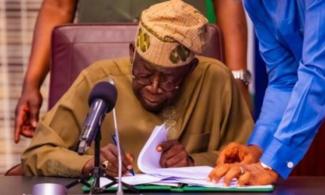
In a press statement issued on Sunday and signed by its National Publicity Secretary, Rex I. Elanu, the opposition party accused the Tinubu-led government of escalating what it described as “economic violence” against Nigerians already burdened by poverty, insecurity and poor governance.
The African Action Congress (AAC) has condemned the alleged alterations to Nigeria’s tax laws by the administration of President Bola Tinubu, describing the move as a “legalised punishment of the poor to enrich the powerful.”
In a press statement issued on Sunday and signed by its National Publicity Secretary, Rex I. Elanu, the opposition party accused the Tinubu-led government of escalating what it described as “economic violence” against Nigerians already burdened by poverty, insecurity and poor governance.
The party said the tax changes, which followed the presentation of the original tax reform document to the National Assembly, were neither reforms nor modernisation, but a deliberate attempt to extract more revenue from suffering citizens while shielding the political elite.
AAC maintained that Nigeria’s tax system has long been unjust, arguing that Nigerians have historically been compelled to pay taxes without enjoying the basic dividends of governance.
"There is no security, citizens are kidnapped, murdered, and displaced daily. There is no welfare, millions survive without social protection in the face of rising unemployment and hunger,” the party stated.
“There is no infrastructure, roads are death traps, power supply is epileptic, healthcare and education are in ruins. Yet taxes are relentlessly collected, as if Nigerians are beneficiaries of a functional state.”
According to AAC, rather than addressing these systemic failures, President Tinubu has chosen to worsen the situation by altering tax laws to place more burden on ordinary Nigerians.
The party accused the ruling All Progressives Congress (APC) of plunging the country into massive debt and now attempting to transfer the cost of what it called “elite corruption, waste and mismanagement” to workers, traders, artisans, students and small business owners through increased taxation.
"Instead of addressing this historic injustice, Bola Tinubu has chosen to worsen it,” the party said.
“His administration is altering tax laws not to make life easier for Nigerians, but to squeeze more blood from a suffering population, while protecting and enriching himself and the same oppressive ruling class that have looted this country dry.”
The party accused Tinubu and the APC of plunging Nigeria into unsustainable debt and mortgaging the country’s future.
The party said the government is now attempting to make ordinary Nigerians bear the consequences through increased taxation.
AAC rejected claims that higher taxes on an impoverished and struggling population would lead to development.
“AAC rejects the lie that higher taxes on a poor and struggling population will ‘develop’ Nigeria. You cannot tax people into prosperity when they have no jobs, no security, and no social safety nets,” it said.
“What Tinubu is doing is shifting the burden of elite corruption, waste, and debt mismanagement onto market women, workers, artisans, students, and small business owners.”
“Taxation without tangible benefits is nothing but organised extortion,” the statement added, insisting that increasing taxes in a system plagued by corruption and lack of accountability is “immoral and criminal,” the party said.
The party demanded an immediate halt to what it described as regressive tax laws, calling for a people-centred economic policy that prioritises job creation, living wages, security, healthcare, education and infrastructure.
The AAC called for an immediate suspension of all regressive tax measures that further impoverish Nigerians and urged the adoption of people-centred economic policies that prioritise jobs, living wages, security, healthcare, education and infrastructure before any increase in taxation.
The party also demanded full transparency and accountability in public finance, including a forensic audit of Nigeria’s rising debts and the use of borrowed funds, while condemning a system of governance it said protects the wealthy and punishes the poor.
Reiterating its position, the AAC argued that Nigeria’s challenge is not inadequate taxation but a crisis of leadership, and vowed to continue opposing what it described as anti-people policies while mobilising citizens for systemic change.