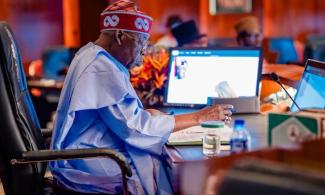
Oyedele addressed the controversy during an appearance on Channels TV, where he clarified that reports circulating online about amendments to the tax laws were misleading and unfounded.
The Chairman of the Presidential Tax Committee, Taiwo Oyedele, has denied claims that Nigeria’s newly gazetted tax laws were altered, insisting that the committee reportedly linked to the alleged changes has not even convened.
Oyedele addressed the controversy during an appearance on Channels TV, where he clarified that reports circulating online about amendments to the tax laws were misleading and unfounded.
“I joined Channels TV to discuss recent issues about the gazetted copies of the new tax laws. To be clear, this is not a legislative versus executive blame game, nor is it politics. It is a process and governance issue,” he said.
Oyedele made the remarks in his capacity as Chairman of the Presidential Tax Committee on Monday, December 22, 2025.
Responding directly to allegations of alterations, Oyedele distanced himself and the committee from the viral document purporting to outline specific changes to the laws.
“The viral document claiming specific alterations to the tax laws and presented as the report of the committee set up to investigate the issue surfaced when the committee had not even met,” he stated.
He stressed that 'misinformation' surrounding tax reforms risks undermining public trust, noting that taxation lies at the heart of the relationship between citizens and the state.
“Tax policy affects citizens directly being at the centre of the social contract, so it must be anchored in trust and facts, not fear or misinformation which only creates uncertainty and further undermines confidence,” Oyedele said.
Oyedele urged the public and stakeholders to avoid spreading unverified claims and instead focus on strengthening institutional processes.
“Rather than spreading misinformation, we should seize this moment to strengthen our processes, deepen accountability, and build a tax system that moves Nigeria forward,” he added.
He also warned that halting or rejecting the reforms based on false claims would have negative consequences for the economy. “Rejecting or stalling reform is not a neutral choice. It means preserving a broken system that over-taxes workers, hurts small businesses, sustains multiple and nuisance taxes, and distorts economic growth,” Oyedele said.
It would be recalled that the Socio-Economic Rights and Accountability Project (SERAP) called on President Tinubu to urgently establish an independent panel of inquiry to investigate allegations that Nigeria’s recently gazetted tax laws differ materially from the versions passed by the National Assembly.
In a Freedom of Information request made last week Saturday and signed by SERAP deputy director Kolawole Oluwadare, the organisation urged the President to “urgently establish an independent panel of inquiry to promptly, independently, impartially, transparently and effectively investigate the allegations that there are material differences between the tax bills passed by the National Assembly and the tax laws ultimately gazetted by the Federal Government.”
SERAP said the proposed panel should determine what occurred in the lawmaking process and identify those responsible for any alleged changes. According to the organisation, “The panel should have the mandate to establish the facts of what exactly occurred and identify those suspected to be responsible for the alleged alterations.”
It added that “the proposed panel should be headed by a retired Justice of the Supreme Court of Nigeria or Court of Appeal. The findings of the panel should be made public. Anyone responsible for the alleged alterations must face prosecution, as appropriate.”
Beyond the call for a probe, SERAP also asked the President to order the publication of certified true copies of the tax documents. The group urged him to “urgently direct Mr Lateef Fagbemi, SAN, the Attorney General of the Federation and Minister of Justice to widely publish a certified true copy of the version of the tax bills received from the National Assembly and a certified true copy of the tax laws signed by you.”
The documents listed by SERAP include the National Revenue Service (Establishment) Act; the Joint Revenue Board of Nigeria (Establishment) Act; the Nigeria Tax Administration Act; and the Nigeria Tax Act.
SERAP said the allegations include the insertion of “New coercive and fiscal powers (e.g., arrest powers, garnish without court order, compulsory USD computation, appeal security deposits) … in the final Acts without legislative approval.”
The organisation gave the government a seven-day deadline, stating: “We would be grateful if the recommended measures are taken within 7 days of the receipt and/or publication of this letter. If we have not heard from you by then, SERAP shall take all appropriate legal actions to compel your government and the Attorney General to comply with our request in the public interest.”