Jackson was freed following a pardon issued by Adamawa State Governor Ahmadu Umaru Fintiri, ending a case that had drawn growing attention from U.S. lawmakers and religious freedom advocates.
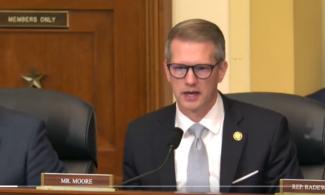
The United States Rep. Riley M. Moore has welcomed the release of Sunday Jackson, a Nigerian Christian farmer who spent more than a decade on death row after killing an attacker he said assaulted his home, calling the pardon a “major step forward” for religious freedom and U.S.–Nigeria relations.
Jackson was freed following a pardon issued by Adamawa State Governor Ahmadu Umaru Fintiri, ending a case that had drawn growing attention from U.S. lawmakers and religious freedom advocates.
Jackson had been sentenced to death after killing a Fulani Islamic radical during what his supporters describe as an act of self-defence.
“Sunday Jackson is free!” Moore said in a statement released on Wednesday morning which he personally shared on his X handle. “After more than a decade in prison serving a death sentence for defending himself, Sunday Jackson has been pardoned.”
Moore, a Republican, has spent months pressing Nigerian officials on the case, raising it during congressional hearings, media interviews, and private diplomatic meetings in Washington and abroad. He also discussed Jackson’s imprisonment during a recent congressional delegation visit to Nigeria.
“Sunday is a Christian farmer who, like countless other Christians in Nigeria, was brutally attacked by an Islamic radical,” Moore said. “Sunday fought back in self-defense, killing his attacker. I have been advocating for Sunday’s release both in public and in private meetings, including during my recent Congressional Delegation visit to Nigeria.”
The congressman framed Jackson’s release as a sign of improving cooperation between the Nigerian government and the United States, particularly on issues related to religious persecution and security.
“Sunday Jackson’s release is a positive development in the relationship between the Nigerian government and the United States,” Moore said. “It demonstrates a willingness by President Bola Tinubu and his government to work in coordination and cooperation with the United States to address the persecution of Christians.”
Moore also credited Nigerian leadership for engaging with U.S. concerns, while emphasizing that broader challenges remain.
“There is much more to do, but I continue to see positive steps that my concerns—and the concerns of President Trump—are being taken seriously by the Nigerian government,” he said. “I want to thank President Tinubu for his administration’s willingness to engage in continued constructive discussions with the U.S. Government on establishing a strategic security framework between our two countries.”
At the same time, Moore urged Nigerian authorities to ensure Jackson’s protection now that he has been released.
“The Nigerian government at the federal and state level must ensure Sunday’s safety during and following his release,” he said.
Closing his statement on a religious note, Moore highlighted the timing of the pardon.
“Our Lord came to set the captives free, and now Sunday will be able to celebrate Christmas with his family,” he said. “Thanks be to God.”
Jackson’s case has become emblematic for advocates who argue that Christians in parts of Nigeria face disproportionate violence and legal consequences amid ongoing clashes between farmers and armed groups.
While his release has been celebrated by supporters, human rights groups say it also underscores the need for broader reforms to Nigeria’s justice and security systems.