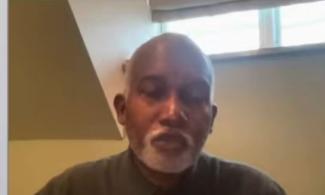
Speaking on Channels Television, monitored by SaharaReporters on Friday, Tuggar said the development marks a major shift in bilateral security cooperation following years of limitations tied to the US Leahy Law.
Nigeria can now purchase military hardware from the United States as Washington relaxes restrictions previously imposed over human rights concerns, Foreign Affairs Minister Yusuf Maitama Tuggar has confirmed.
Speaking on Channels Television, monitored by SaharaReporters on Friday, Tuggar said the development marks a major shift in bilateral security cooperation following years of limitations tied to the US Leahy Law.
“Well, yes, I believe so. It’s part of the cooperation as well,” he stated when addressing the issue. “But again, there are other considerations that they make, and also considerations we have to take in terms of our pockets. How much are we willing to spend on equipment so it is something that has to do with financial considerations as well.”
Tuggar welcomed the new opening but warned that affordability remains a critical barrier for Nigeria as it seeks to upgrade its defence capabilities.
He also cautioned that the improved flow of military sales does not erase the long-term consequences of past foreign interventions in Africa, especially NATO’s role in Libya and the killing of Muammar Gaddafi.
According to him, the destabilisation of Libya triggered a chain reaction that continues to fuel insecurity across West Africa.
Linking the spread of fighters and weapons from Libya to the rise of armed violence in the Sahel and Nigeria, the minister said, “If that Leahy Law had not been applied, if previous administrations had not gone into Libya, broken up Libya… Remember when Gaddafi was killed. So that led to further insecurity in our region that is affecting us today because it meant that fighters from Libya were coming all the way down into the Sahel and into Nigeria.
“It also meant that weapons amassed by the Gaddafi regime also found their way further south.”
He argued that Nigeria managed regional interventions more effectively before the Leahy Law came into force, recalling successful ECOMOG peacekeeping missions in Liberia and Sierra Leone.
“If you go back a couple of decades, when Nigeria led ECOMOG operations to stabilise Liberia and Sierra Leone, the Leahy Law was not in place, and that made us more effective,” Tuggar noted.
“There is a clear cause and effect here.”
Tuggar insisted that portraying Nigeria’s security crisis as a strictly domestic or religious issue has contributed to ineffective international responses.
“This is a regional conflict, not just a Nigerian conflict,” he stressed. “If you frame it incorrectly, you end up applying the wrong solutions.”
The Leahy Law is a U.S. human rights law named for Senator Patrick Leahy, prohibiting American military aid to foreign security force units, like the police or military implicated in "gross violations of human rights" (GVHRs) like torture, extrajudicial killings, or rape, unless the host country takes corrective action.
It works through a vetting process by the State and Defense Departments to identify abusive units, aiming to stop U.S. funds from supporting such violations and incentivizing accountability by foreign governments