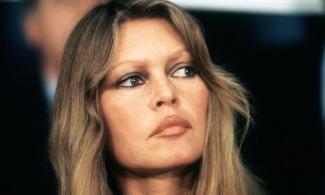
In a statement confirming her death, the Brigitte Bardot Foundation described her as an exceptional woman who gave everything and gave up everything for a world more respectful of animals.
Brigitte Bardot, the French screen legend who redefined global pop culture with her daring roles before abandoning cinema to champion animal rights, has died at age 91, her foundation announced on Sunday.
In a statement confirming her death, the Brigitte Bardot Foundation described her as an exceptional woman who gave everything and gave up everything for a world more respectful of animals.
The group said her legacy would continue through its advocacy work, according to CNN.
Bardot, often referred to simply as “B.B.” in France, rose to international fame in the 1950s and ’60s with boundary-pushing roles that challenged conservative norms.
Films such as Contempt and …And God Created Woman cemented her status as a global sex symbol and made her a cultural force at a time when Hollywood censorship avoided open discussions of sexuality.
Her impact went beyond film. Bardot’s personal style, tousled blond hair, ballet flats, and casual clothing, shaped fashion across Europe and America for decades. Generations of actresses and models, from Jane Fonda to Kate Moss, were visibly influenced by her approach to beauty and self-presentation.
French President Emmanuel Macron led tributes, saying Bardot “embodied a life of freedom” and describing her as a national emblem whose image once represented France itself.
Bardot retired from acting in 1973 at age 39, saying she wanted to dedicate her life to protecting animals. She auctioned her personal belongings to fund her foundation and became a fierce critic of cruelty in farming, hunting, and fashion.
However, her outspoken activism later drew condemnation in France, particularly when she attacked Islamic animal-slaughter rituals and aligned herself politically with figures linked to the country’s far right.
Advocates accused her of stoking anti-immigrant sentiment, though she continued to deny being motivated by racism.
Born in Paris in 1934 to an upper-middle-class family, Bardot’s early ambitions were in ballet. Her film career began after appearing on the cover of Elle magazine as a teenager, drawing the attention of filmmakers. By her early twenties, she was one of Europe’s most photographed women and a tabloid obsession.
Bardot herself frequently criticised fame, saying it stole her privacy and identity. She spoke openly about the emotional pressure of celebrity life, saying at one point that she felt “imprisoned” by her global stardom.
Despite her turbulent relationship with the spotlight, her influence on cinema, fashion, and feminist discourse remains undeniable.
Critics and cultural analysts describe her as one of the first modern celebrities, a woman who publicly rejected expectations around beauty, sexuality, and womanhood, even when it made her a target.