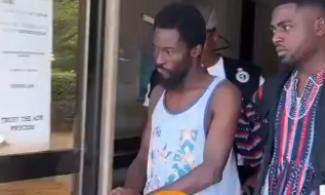
The suspect, born Evans Eshun, was arrested by operatives of the Ghana Police Service Special Cyber Vetting Team on December 31, 2025.
A Ghanaian self-styled prophet, Ebo Noah, accused of causing widespread panic with a doomsday prophecy predicting a global flood, has been remanded in custody by the Adenta District Court and ordered to undergo a psychiatric evaluation.
The order was made on Friday during his first court appearance following his arrest for false communication and causing fear and panic.
The suspect, born Evans Eshun, was arrested by operatives of the Ghana Police Service Special Cyber Vetting Team on December 31, 2025.
The court adjourned the matter and fixed January 15 for his re-arraignment, pending the outcome of the psychiatric assessment.
Eshun attracted national attention after claiming that God had revealed to him that the world would be submerged by a global flood on December 25, 2025.
The prophecy, which he repeatedly promoted on social media, triggered anxiety across the country and beyond.
The self-proclaimed prophet had constructed what he described as an “ark” at his premises, which he claimed would serve as the only refuge for humanity ahead of the supposed disaster.
Content creator and self acclaimed prophet, Evans Eshun, aka, Ebo Noah has been remanded into police custody for two weeks, following the adjournment of court proceedings at the Adentan Circuit Court.
The court has also ordered for a psychiatric evaluation of the suspect at the… pic.twitter.com/0F1Bp9l4wA
— SIKAOFFICIAL🦍 (@SIKAOFFICIAL1) January 2, 2026
Ghanaian authorities said hundreds of people, including individuals from neighbouring countries, reportedly abandoned their homes and travelled to the site with luggage, believing they would be saved.
When the predicted flood failed to occur on December 25, Eshun released a video claiming that his prayers and fasting had persuaded God to “postpone” the destruction, rather than admitting the prophecy had failed.
His actions continued to draw outrage after he made a dramatic appearance at rapper Sarkodie’s ‘Rapperholic 2025’ concert, where he told concertgoers to celebrate because the doom had been delayed, further fuelling public backlash.
Police authorities had earlier warned against declarations capable of creating public anxiety, particularly during the festive season and New Year’s Eve services.
The case has since ignited debate in Ghana over religious extremism, misinformation and the limits of free expression, as authorities move to hold the self-styled prophet accountable for the social disruption linked to his claims.