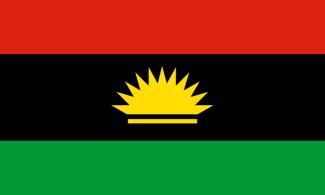
The separatist group accused politicians and security actors of cultivating militias and criminal gangs before “turning around to blame IPOB when chaos spiraled,” describing the practice as scapegoating and deflection.
The Indigenous People of Biafra (IPOB) has called for an independent, internationally supervised public inquiry into the causes of insecurity in Nigeria’s South-East, accusing the Nigerian government and the military of concealing the truth behind violence in the region.
In a statement issued on Friday by its spokesperson, Emma Powerful, IPOB criticised comments attributed to Major General Michael Onoja, describing them as “recycled propaganda,” and challenged the Nigerian authorities to submit their claims to public scrutiny.
“For years, IPOB has publicly and repeatedly demanded a full, open, internationally supervised inquiry into the insecurity in the South-East, headed by an impartial judge, preferably from South Africa, beyond the reach of Nigerian political manipulation,” the group said.
But IPOB questioned the government’s refusal to accede to such calls, asking, “If the military is so confident in its narrative, then let the world see the evidence under oath, in the open, with witnesses protected and cross-examined.”
Onoja reportedly said that security conditions in the South-East had improved significantly, following the imprisonment of IPOB leader Nnamdi Kanu and self-acclaimed Biafra Nation agitator Simon Ekpa.
Onoja said that crimes and other criminal activities had reduced across the region over the past year as a result of sustained military pressure in the South-Eastern states and recent court rulings against IPOB’s leadership.
The senior military officer claimed that the imprisonments of Ekpa and Kanu by the Finnish and Nigerian governments respectively have dealt a major blow to the operational strength of IPOB and criminal groups, weakening their ability to coordinate and execute attacks.
However, IPOB said it had “nothing to hide” and urged international bodies, including the United States, the United Nations, the African Union and the European Union, to support the establishment of an independent commission of inquiry.
According to the Powerful, IPOB argued that the military’s narrative on insecurity ignores a history of alleged abuses against civilians, citing incidents such as the May 30, 2016 Nkpor killings, the Aba National High School incident, the invasion of the home of the IPOB leader Kanu, the Zaria Shiite clashes, the Odi and Zaki-Biam military operations, and the 2020 Lekki Toll Gate shootings.
“These were not ‘security operations.’ They were state violence against unarmed civilians,” Powerful stated.
IPOB also referenced past remarks by former Minister of Defence, General Theophilus Danjuma (rtd), who had warned that elements within the security forces were colluding with armed groups, questioning whether current military leaders were ignoring such concerns.
The separatist group accused politicians and security actors of cultivating militias and criminal gangs before “turning around to blame IPOB when chaos spiraled,” describing the practice as scapegoating and deflection.
It further criticised Nigeria’s major political parties, the All Progressives Congress (APC) and the Peoples Democratic Party (PDP), accusing them of presiding over what it described as a nationwide collapse of security.
In its demands, IPOB called for a judge-led public inquiry into insecurity in the South-East chaired by a foreign jurist, full access to security records and directives, international oversight with protection for whistleblowers, and the “immediate and unconditional release” of its imprisoned leader, Kanu.
“If Nigeria has nothing to hide, it should welcome scrutiny,” the group said, adding that continued refusal to allow an independent inquiry would only deepen suspicions.
IPOB noted that the Nigerian government was “not afraid of IPOB” but “afraid of being exposed,” insisting that “history is patient, and history always catches up.”