Some of the judiciary workers told SaharaReporters on Saturday that another outrage is the governor’s decision to grant “80 per cent autonomy” limited only to recurrent expenditure, excluding capital projects.
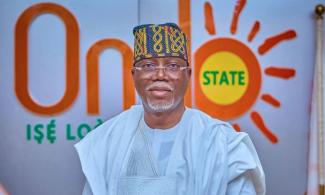
The Ondo State’s justice system has ground to a near-total halt amid accusations that Governor Lucky Aiyedatiwa is deliberately strangling the judiciary through severe budget cuts, partial financial autonomy and prolonged neglect of judicial welfare.
At the centre of the crisis is a drastic reduction in the judiciary’s proposed budget, from ₦17 billion in 2025 to ₦9.5 billion for 2026, an almost 45 per cent cut that judicial officers say will cripple court operations and worsen already dire working conditions.
Some of the judiciary workers told SaharaReporters on Saturday that another outrage is the governor’s decision to grant “80 per cent autonomy” limited only to recurrent expenditure, excluding capital projects.
They warned that the implication of this arrangement is grim: "with the reduced envelope and partial autonomy, staff salaries could be slashed by as much as 20 per cent in 2026, while infrastructure decay remains unaddressed."
“This is not autonomy; it is a slow suffocation of the judiciary,” a senior judicial officer lamented.
“You cannot strip the courts of capital funding, reduce their budget, and still claim to respect judicial independence.”
Across Ondo State, court buildings are reportedly in a deplorable state. Many courtrooms leak badly during rainfall, forcing judges to suspend sittings as floors become flooded.
Legal practitioners and litigants describe scenes where files are hurriedly packed away as rainwater pours into courtrooms, turning halls of justice into “swimming pools.”
Despite repeated appeals, little has been done to rehabilitate these facilities.
Magistrates and Presidents of Grade ‘A’ Customary Courts are said to commute to work on commercial motorcycles, popularly known as okada, due to the absence of official vehicles.
In some instances, judicial officers reportedly share rides with litigants and even criminal suspects whose cases they are assigned to hear—an arrangement widely viewed as both unsafe and degrading.
High Court judges, meanwhile, are said to be using official vehicles that are more than six years old and increasingly unreliable. Requests for replacement or repair, according to judicial sources, have gone unanswered since 2024.
Further deepening the crisis is the alleged refusal of the Commissioner for Finance to release ₦400 million approved by the governor since 2024 for judicial needs.
Sources within the judiciary claim the funds remain unpaid, with the governor unable—or unwilling—to compel compliance from his own appointee.
“The commissioner is defying the approval, and the governor appears helpless,” a source said. “It raises serious questions about leadership and control.”
The unfolding welfare and funding crisis has triggered an indefinite strike by magistrates, Presidents of Grade ‘A’ Customary Courts, Legal Research Officers and members of the Judiciary Staff Union of Nigeria (JUSUN).
A recent meeting between Governor Aiyedatiwa and judicial unions ended in deadlock, as workers unanimously rejected what they described as half-measures and empty promises.
According to participants, the governor failed to commit to full financial autonomy as guaranteed by the Constitution.
“At the end of the meeting, our position was plain: no financial autonomy, no work,” a judicial source said.
Since Monday, judicial workers have physically locked judges out of court premises in Akure, sealing the Judiciary Headquarters and halting all court activities statewide.
Official vehicles belonging to judges were seen parked outside locked gates, a stark symbol of the paralysis of justice under the current administration.
By Tuesday, JUSUN formally joined the strike, completely crippling the justice system and leaving litigants stranded, detainees languishing in custody, and legal processes suspended indefinitely.
What has further angered striking workers is what they describe as Governor Aiyedatiwa’s “hypocrisy and ingratitude.”
Judicial sources allege that the governor personally benefitted from favourable judicial processes in the past, yet now presides over what they call the systematic humiliation and impoverishment of the same institution.
“The governor wants obedience without justice,” a judicial officer said. “But the judiciary cannot continue to beg for survival while politicians live in excess.”
Multiple accounts paint a bleak picture of life for judicial officers in Ondo State.
Magistrates reportedly appear in court wearing worn-out shoes, faded suits and patched clothing. Some struggle to afford regular meals, while others rely on public transport daily despite the sensitive nature of their duties.
Observers say the situation mirrors the recent crisis in neighbouring Kogi State, where judiciary workers embarked on a similar strike in December 2025 over welfare neglect—an indication, they argue, of a wider pattern of state-level disregard for judicial independence.
With courts shut, staff unions united, and public confidence in justice delivery eroding, pressure is mounting on Governor Aiyedatiwa to reverse course.
Legal analysts warn that continued paralysis of the judiciary poses grave risks to the rule of law, public safety and democratic governance in Ondo State.