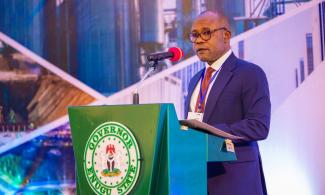
This is also amid the state government’s failure to publish its 2024 audited financial accounts for public scrutiny.
The Enugu State Governor, Peter Mbah, has earmarked ₦1 billion in the 2026 budget proposal for the establishment of multiple agricultural projects in Owo, his community in Nkanu East Local Government Area, amid growing concerns over accountability.
This is also amid the state government’s failure to publish its 2024 audited financial accounts for public scrutiny.
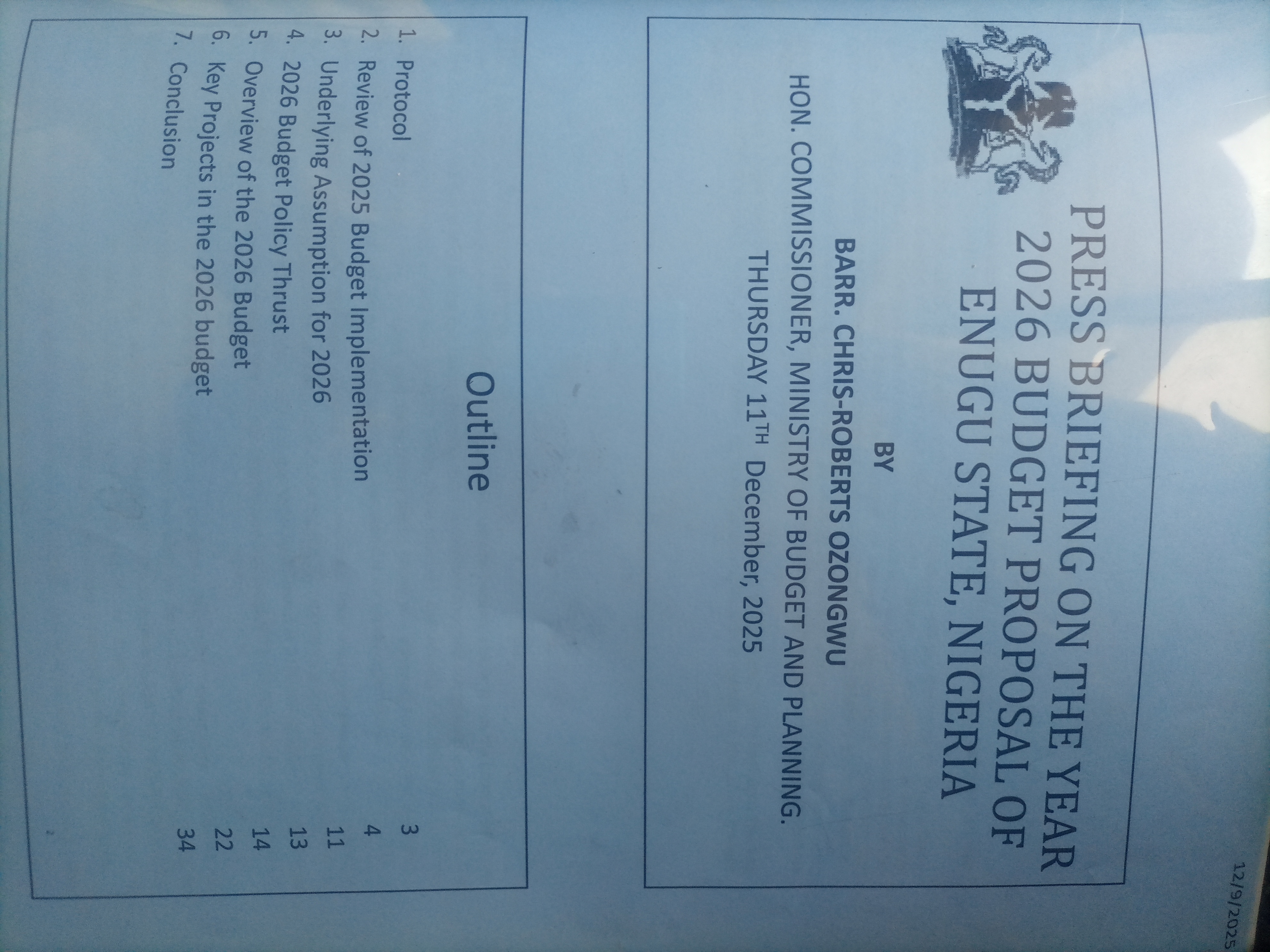
Details of the allocation are contained in the 2026 budget breakdown document prepared by the Commissioner for Budget and Planning, Chris-Roberts Ozongwu, and obtained by SaharaReporters on Tuesday.
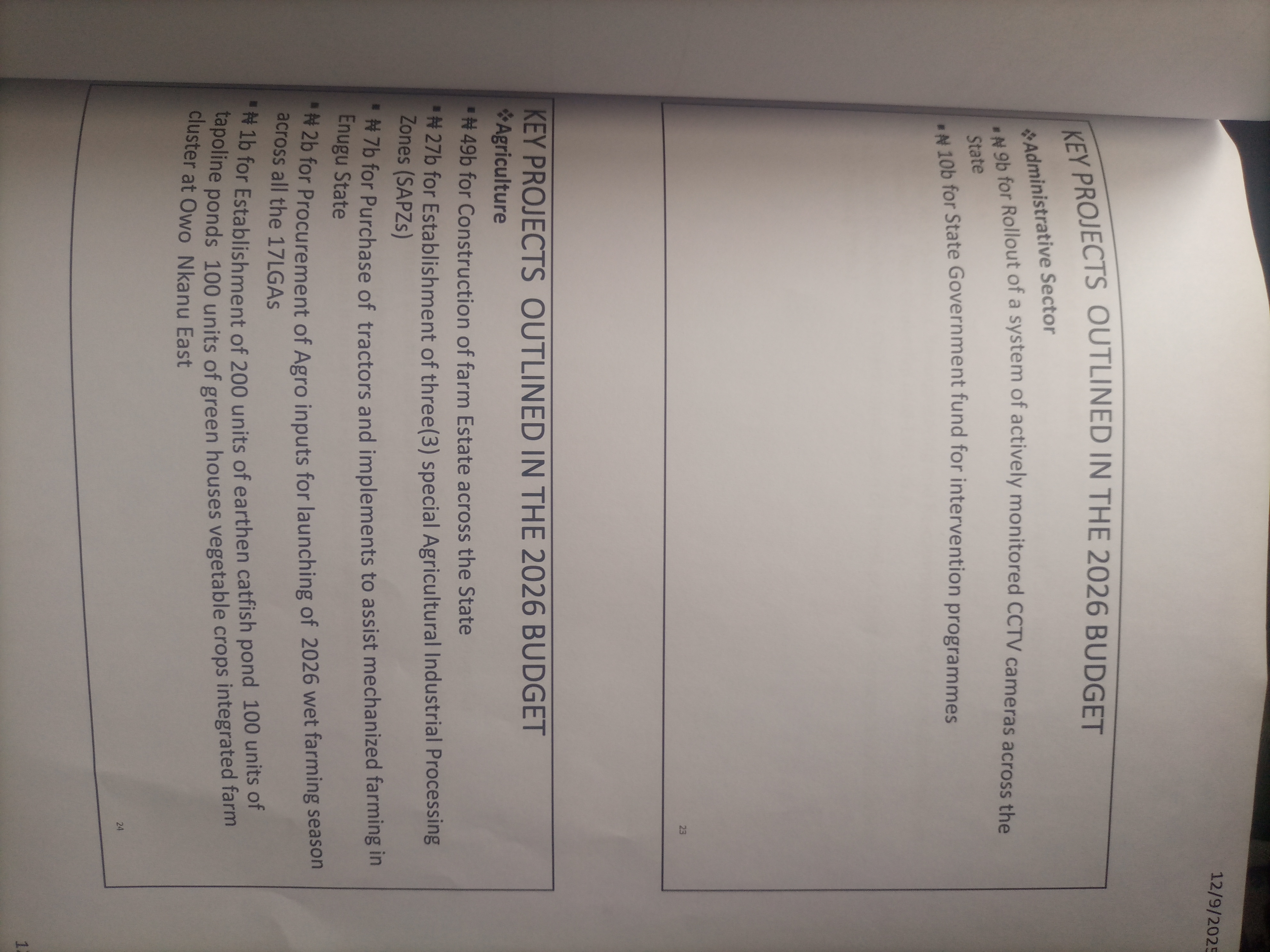
According to the document, the ₦1bn allocation is for the “establishment of 200 units of earthen catfish ponds, 100 units of tarpaulin ponds, and 100 units of greenhouse vegetable crop integrated farm clusters at Owo, Nkanu East.”
The concentration of the projects in the governor’s home community has raised questions among critics about equity, prioritisation and potential conflict of interest, especially in the absence of publicly available audited accounts.
The allocation forms part of what the administration describes as sweeping agricultural interventions proposed for the 2026 fiscal year.
However, analysts note that the ambitious spending plans are coming at a time when Enugu State has not published its audited financial statements for 2024, contrary to transparency and public finance best practices.
Beyond the projects in Owo, the government proposed ₦49 billion for the construction of farm estates across the state, despite the existence of abandoned farm estates in Adani (Uzo-Uwani LGA), and Ete and Aguibeje (Igbo-Eze North LGA).
Critics argue that the continued neglect of these legacy assets undermines the rationale for committing huge sums to new estates.
The budget document also shows that the state plans to spend ₦27 billion on the establishment of three Special Agricultural Industrial Processing Zones (SAPZs), while ₦7 billion has been allocated for the purchase of tractors and farm implements to support mechanised agriculture.
This tractor procurement follows a similar provision in the 2025 budget, under which the government announced plans to acquire 1,000 tractors.
In April 2025, the state confirmed the delivery of the first batch of 100 tractors, with officials stating that additional units were expected.
The government also disclosed plans to establish a tractor assembly plant in Enugu, in partnership with a Danish firm, ODK Group/Nortra Tractors, with a target of assembling 800 units locally.
In the 2026 proposal, the government further allocated ₦2 billion for the procurement of agro-inputs to launch the 2026 wet farming season across the state’s 17 local government areas, alongside the ₦1bn farm cluster project sited in Owo
Outside agriculture, the budget breakdown reveals a proposed ₦9 billion for the rollout of an “actively monitored” CCTV surveillance system across Enugu State, as well as ₦10billion earmarked as a state government intervention fund for unspecified programmes.
While the administration has continued to project the budget as evidence of its commitment to agricultural transformation and security, observers insist that transparency remains a major concern.
Meanwhile, civil society groups and public finance analysts have questioned why the government has yet to publish its 2024 audited accounts, arguing that without independent verification of past expenditures, the scale and location of new budgetary commitments—particularly projects concentrated in the governor’s community—deserve closer public examination.
The Enugu State government has not offered an explanation for the non-publication of its 2024 audited financial statements nor responded to concerns over the concentration of key agricultural projects in the governor’s hometown as of the time of filing this report.