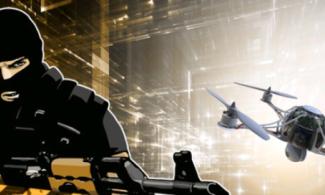
A terrorist group that can surveil, target, and strike from the air gains a dangerous advantage, especially in terrain already challenged by poor visibility, vast distances, and difficult operating conditions.
Unmanned Aerial Vehicles (UAVs), commonly known as drones, are aircraft that operate without human pilots on board. They can be remotely controlled or guided autonomously using programmed routes and onboard systems. In legitimate military and civilian use, they support reconnaissance, disaster response, agriculture, and security operations.
In the hands of terrorists, however, they become tools of asymmetric warfare, cheap, difficult to detect, hard to defend against, and capable of striking without warning.
As the world debates the morality and legality of military airstrikes against extremist groups, it is important to move beyond emotional or religious framing and confront a more sobering reality: modern terrorism has entered a new technological phase, and Nigeria is now one of its frontlines.
Recent intelligence assessments suggest that the Islamic State West Africa Province (ISWAP), one of the deadliest terrorist groups operating in the Lake Chad region, has significantly expanded its drone programme. These UAVs are no longer being used only for surveillance; they are now being adapted for hostile military purposes, including the delivery of improvised explosive devices and the coordination of attacks on Nigerian military formations.
This development represents a dangerous escalation in Nigeria’s war against terrorism.
Security sources indicate that ISWAP commanders have concluded arrangements to deploy multiple drones simultaneously against military positions across parts of Borno and Yobe States. Fighters aligned with the group reportedly received a new batch of drones transported through cross-border smuggling routes in the Lake Chad region.
Experts familiar with insurgent tactics note that extremist groups typically modify commercial drones, just as they have done in conflict zones across the Middle East, where such technology has been used to offset their disadvantages against professional armies.
Much of the global criticism directed at military airstrikes, such as those ordered by U.S. President Donald Trump against jihadist groups, tends to misframe the issue as a war between religious communities.
These terrorist groups do not operate under the rules of faith, law, or morality. They recognize no limits to warfare, only destruction, chaos, and civilian suffering. Their victims include Muslims, Christians, and traditional communities alike. Their ideology is rooted not in religion, but in violent extremism and totalitarian control.
They are not defending faith.
They are attacking humanity.
Nigeria’s armed forces have made significant gains in recent years, dismantling camps, capturing commanders, and pushing insurgents out of key territories across Borno, Yobe, and Adamawa States. But the rise of terrorist drone warfare threatens to undermine these hard-won victories.
What is unfolding in Nigeria is not just a regional crisis. ISWAP is formally aligned with the Islamic State, and its success or failure affects security across West Africa, the Sahel, Europe, and beyond.
Terrorist groups today share technology, tactics, and training across borders. Allowing one faction to perfect drone warfare creates a dangerous blueprint for others.
That is why decisive military action, whether by Nigeria or its international partners is not aggression. It is prevention.
The expansion of ISWAP’s drone programme marks a turning point in Nigeria’s counter-terrorism battle. This is no longer a fight waged only with rifles in the forest; it is now a technologically driven war against a group determined to inflict maximum damage at minimal cost.
Terrorists who seek to weaponize technology against civilians and soldiers alike must be confronted with equal resolve.
It is a war against terror, chaos, and the destruction of human life.
And they must not win.
Daniel Nduka Okonkwo is a seasoned writer, human rights advocate, and public affairs analyst renowned for his incisive commentary on governance, justice, and social equity. Through Profiles International Human Rights Advocate, he champions accountability, transparency, and institutional reform in Nigeria and beyond. With over 1,000 published articles indexed on Google, his work has appeared on Sahara Reporters and other leading international media platforms.
He is also an accomplished transcriptionist, petition writer, ghostwriter, and freelance journalist, widely recognized for his precision, persuasive communication, and unwavering commitment to human rights.