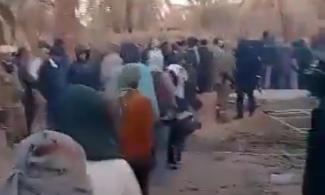
The rescued migrants, whose nationalities were not immediately disclosed, told investigators that they had been confined in the underground prison for more than two years.
No fewer than 221 abducted migrants have been rescued in Libya following a joint operation by the Directorate for Combating Illegal Migration (DCIM) and the Sabil al-Salam Border Protection Battalion.
The successful operation, which took place in the Kufra area of southeastern Libya, led to the discovery of an underground prison where the migrants had been held captive by a Libyan human trafficker under horrific and inhumane conditions.
The Migrant Rescue Watch disclosed the development in a statement issued on Monday.
According to the statement, the joint security team stormed the trafficking site after receiving intelligence reports about the illegal detention of migrants in the area.
During the operation, 221 migrants were freed from the underground facility, which was reportedly hidden from public view to evade detection by authorities.
The rescued migrants, whose nationalities were not immediately disclosed, told investigators that they had been confined in the underground prison for more than two years.
Testimonies obtained after the rescue revealed that victims were subjected to sub-human conditions, including overcrowding, lack of adequate food and water, poor ventilation, and denial of basic medical care.
Migrant Rescue Watch noted that the conditions in the facility posed severe health risks, with many of the detainees suffering from physical weakness, untreated injuries, and illnesses linked to prolonged abuse and neglect.
“DCIM jointly with Sabil al-Salam Border Protection Bn carried out raid on human trafficking site in Kufra area. During op 221 migrants were freed from an underground prison which was run by a Libyan human trafficker,” the statement read.
It added, "According to testimonies migrants were kept in the prison for more than two years in sub-human conditions. Following the rescue op more than 10 migrants in critical conditions were transferred to hospital for urgent treatment."
Libya has long been identified by international human rights organisations as a major hub for human trafficking and migrant abuse, especially along routes used by migrants from sub-Saharan Africa seeking to cross the Mediterranean Sea to Europe.
Armed groups and criminal networks are known to exploit migrants through kidnapping, forced labour, extortion, and detention in makeshift prisons.