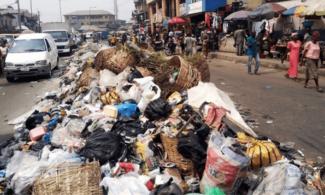
In a press statement issued on Wednesday by its convener, Francis Nwapa, the coalition expressed deep concern that heaps of uncollected waste have taken over streets, markets, and neighbourhoods across the state.
The #EndMalariaInNigeria advocacy coalition has condemned the worsening environmental sanitation crisis across Lagos State, warning that the unchecked accumulation of refuse on major roads and within residential areas could trigger a major public health emergency.
In a press statement issued on Wednesday by its convener, Francis Nwapa, the coalition expressed deep concern that heaps of uncollected waste have taken over streets, markets, and neighbourhoods across the state.
It noted that this occurred while the Lagos State government remained largely silent despite the attendant health risks.
According to the group, the situation is particularly troubling given Lagos State’s annual struggle with outbreaks of cholera, Lassa fever, and malaria.
It argued that the current environmental conditions contradict recent public assurances by the Lagos State Commissioner for Health that malaria has become a rare disease in the state.
“This claim is inconsistent with the reality on ground,” the coalition said, noting that poor waste management remains a major driver of mosquito breeding as well as the proliferation of rodents and other disease vectors.
The group explained that when refuse piles block drainage channels and decay openly within communities, they create ideal breeding grounds for mosquitoes and pests, directly increasing the risk of malaria and other vector-borne diseases.
The coalition also described the waste crisis as evidence of a broader governance failure, alleging that profit and political patronage have been prioritised over public health.
“Rather than ensuring a professional, transparent and integrated waste management system, from point of collection to sorting, recycling and safe disposal, the state continues to compensate political loyalists with waste evacuation contracts,” the statement said.
According to #EndMalariaInNigeria, this approach has undermined efficiency, accountability and effective public health protection, leaving Lagos “dangerously dirty.”
“Refuse heaps now dot roads, markets and residential areas, posing serious threats to the health and dignity of Lagosians,” the group stated.
The coalition further criticised the absence of modern waste management infrastructure in the state, noting that Lagos lacks sanitary landfills and other solutions such as material recovery facilities, composting plants and waste-to-energy systems that are standard in megacities around the world.
Warning that the state is “sitting on a brewing public health disaster,” the group said environmental filth directly fuels malaria transmission and increases the risk of cholera and Lassa fever outbreaks, especially among vulnerable groups such as pregnant women, children, and low-income communities.
The advocacy group called on the Babajide Sanwo-Olu–led administration to take urgent action, including declaring an immediate environmental sanitation and public health emergency.
It also urged the state government to end what it described as politically motivated waste contracts, professionalise waste management across the state, invest in modern waste management infrastructure, and align public health messaging with scientific and environmental realities, particularly in relation to malaria control.
“Lagosians deserve a clean, safe, and healthy environment,” the statement added.
“Saving lives must take precedence over profit. The time to act is now.”