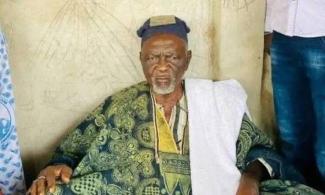
At the heart of the tension is a long-running chieftaincy tussle in Bakwu, a local government area historically plagued by violent clashes between two ethnic groups: the Kusasi and the Mamprusi.
Tension has risen in parts of Ghana after threats linked to the extremist group Boko Haram surfaced on social media, following the arrest and remand of Alhaji Seidu Abagre, a Kusasi man who allegedly paraded himself as the Bakwu Naaba despite long-standing government recognition of another chief.
Boko Haram began trending in Ghana this week after a group of angry supporters, identified as Muslims, threatened to import Boko Haram into the country unless Abagre is released from detention.
At the heart of the tension is a long-running chieftaincy tussle in Bakwu, a local government area historically plagued by violent clashes between two ethnic groups: the Kusasi and the Mamprusi.
Bakwu is traditionally ruled by a paramount chief known as the Bakwu Naaba. While the Kusasi argue that they are the indigenous people of the area and therefore entitled to the stool, the Mamprusi maintain that history and customs place the chieftaincy firmly in their lineage.
The dispute has simmered for decades, frequently degenerating into violence and often requiring heavy military intervention by the state.
The Ghanaian government has, for years, officially recognised Asigri Abugrago Azoka, a Mamprusi, as the legitimate Bakwu Naaba.
Despite this, Alhaji Seidu Abagre, who hails from the Kusasi ethnic group, allegedly began parading himself as Bakwu Naaba, a move authorities say inflamed tensions and provoked unrest.
On December 24, 2025, Abagre was forcibly removed from the contested palace in a military-backed operation and subsequently arrested.
He was charged with impersonation, acting as a chief without qualification, and provoking violent riots.
On Monday, a High Court in Accra denied him bail and ordered that he be remanded in custody. The case is scheduled to continue on February 2.
Following the court ruling, some of Abagre’s supporters issued incendiary statements threatening violence and invoking Boko Haram as leverage to pressure the government into releasing him.
Meanwhile, sources in Ghana insist the remarks were merely expressions of anger and rhetoric, stressing that the group has no links to Boko Haram.
However, these assurances offer little comfort to traumatised Nigerians, who are urging the Ghanaian government to take the threat seriously, before it escalates into serious terrorism or banditry.