SaharaReporters gathered that the committee’s action was prompted by complaints from affected residents.
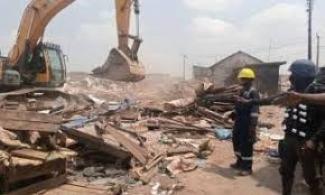
The House of Representatives committee on Public Petition has intervened in the ongoing demolition of houses at Tungamaje, a community in the Federal Capital Territory (FCT), Abuja.
SaharaReporters gathered that the committee’s action was prompted by complaints from affected residents.
"The House of Representatives waded into the matter and while we were supposed to have a hearing on December 8, 2025, the Nigerian Army asked for more time to get together some documents and also study some other documents," a community source told SaharaReporters.
It was further gathered that the lawmakers requested the Nigerian Army to suspend any demolition or related activities in the affected communities while the petition was being reviewed.
"The lawmakers asked that while the issue is being reviewed, the Nigerian Army should not demolish houses or carry out such activities in the areas affected,” the source said.
According to reports, demolitions have been halted as of the time of filing, and the next hearing is scheduled for January 28, 2026.
"The issue will now come up for hearing at the level of the House of Representatives on January 28, 2026," a source familiar with the developments told SaharaReporters.
Background
In October 2025, SaharaReporters reported that personnel of the Nigerian Army ordered residents of Tungamaje to vacate their homes.
Sources said the Army had announced plans to continue demolition exercises in the community.
The situation reportedly caused panic and apprehension among residents, leaving them unsure of what to expect.

In April 2025, residents raised the alarm after the Army demolished parts of a workshop centre used for orientation programmes and community training.
The source condemned the recurring incidents, highlighting the devastation inflicted on residents.
"We are monitoring the circumstances and these developments are very worrisome. People's livelihoods have been threatened, and now they have no shelter, all due to the illegal invasion by the Nigerian Army," the source added.
Earlier reports indicated that the Army stormed Tungamaje in the early hours of April 1, around 2 a.m., demolishing homes without warning.
"They came around 2 a.m. and demolished houses. People have now been displaced, with parents forced to send their children to different places because they can no longer survive," a resident said in despair.
Residents described the emotional toll as unbearable.
"Some persons in the communities affected by the demolition have died; they lost hope and gave up," another source confided to SaharaReporters.
Tungamaje comprises 24 communities, all facing similar threats.
"The Nigerian Army keeps threatening us. When they come, they order people to leave without giving them a choice. They come fully armed, and people, already scared, become even more terrified when they see soldiers with weapons," a source said.
Displaced families are now seeking shelter wherever possible like makeshift tents, rented dilapidated buildings, or sending children to relatives far away.
"Where do we go from here? My children have nowhere to sleep, and my wife cries every night. We have written letters to many places, from the office of the Vice President to the FCT Ministerasking for intervention, but nothing has come," a resident said.
Residents accused the Nigerian government of failing to restrain the military.
"The Nigerian government seems to be scared of the military. The FCT Minister told us the land was never allocated to the Nigerian military. Even when a Senate Committee held a public hearing, it was the same story. One would have expected the military to stop based on the government's position, but they keep coming and threatening people in their homes," a resident said.
Adding to their hardship, the Army has allegedly seized farmlands in the predominantly agricultural community.
"They took over our farms. Sometimes, you go to your farm and discover that the Nigerian military has leased it out to someone else. That’s when you find a stranger working your land—your own farm, the one you cultivated—and they now harvest what is rightfully yours," the resident said.