The land is reportedly located right by Ukachukwu Close, near the Maitama Extension.
The Minister of the Federal Capital Territory (FCT), Nyesom Wike, has been accused of allocating a designated green area in Maitama Extension, Abuja, for the construction of luxury residential buildings, in clear violation of the Abuja Master Plan.
The land is reportedly located right by Ukachukwu Close, near the Maitama Extension.
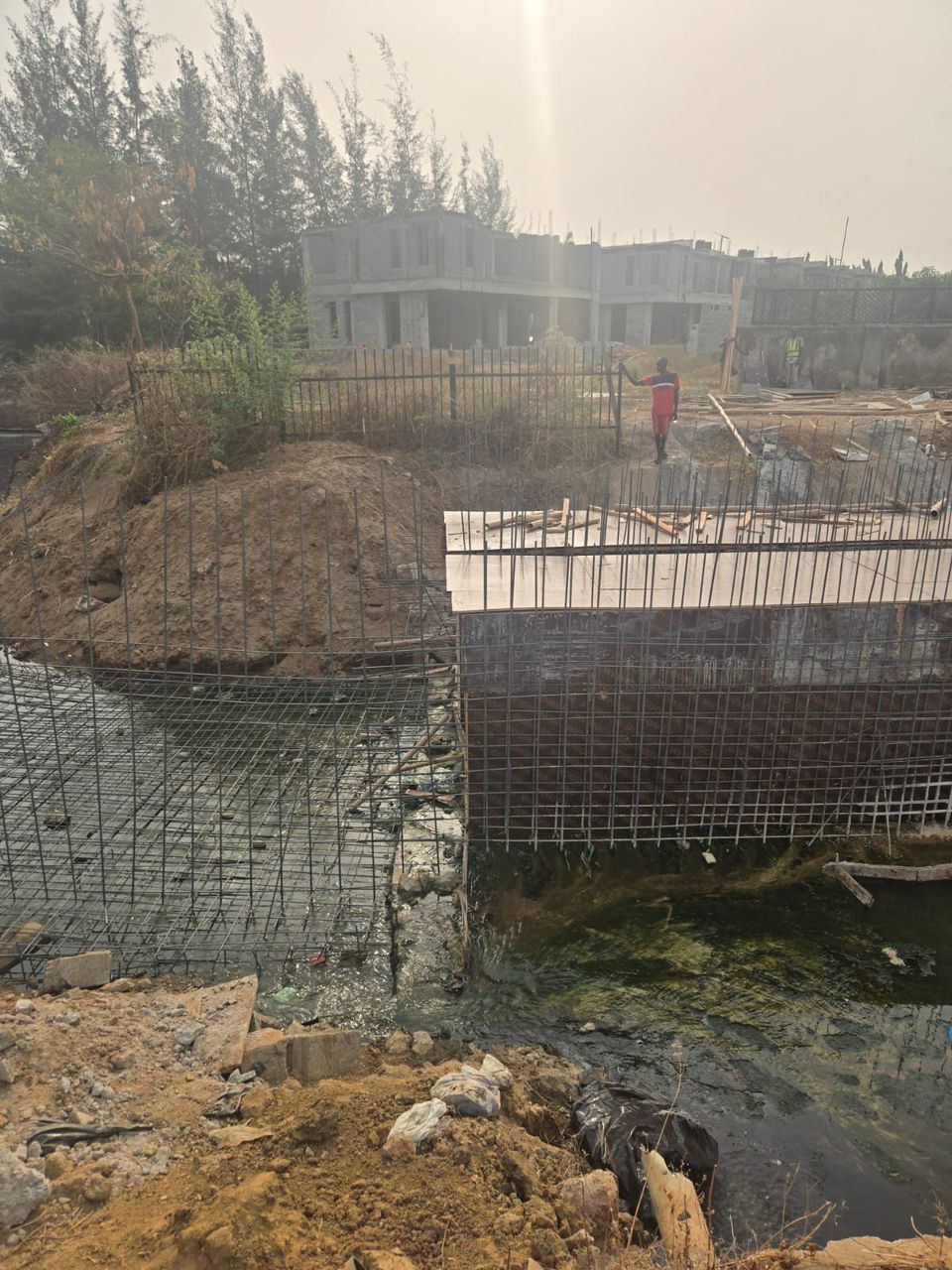
The disputed land, which is said to be a protected green zone meant to serve as a natural buffer and drainage corridor, is allegedly being developed into a high-end residential estate consisting of about 20 duplexes.
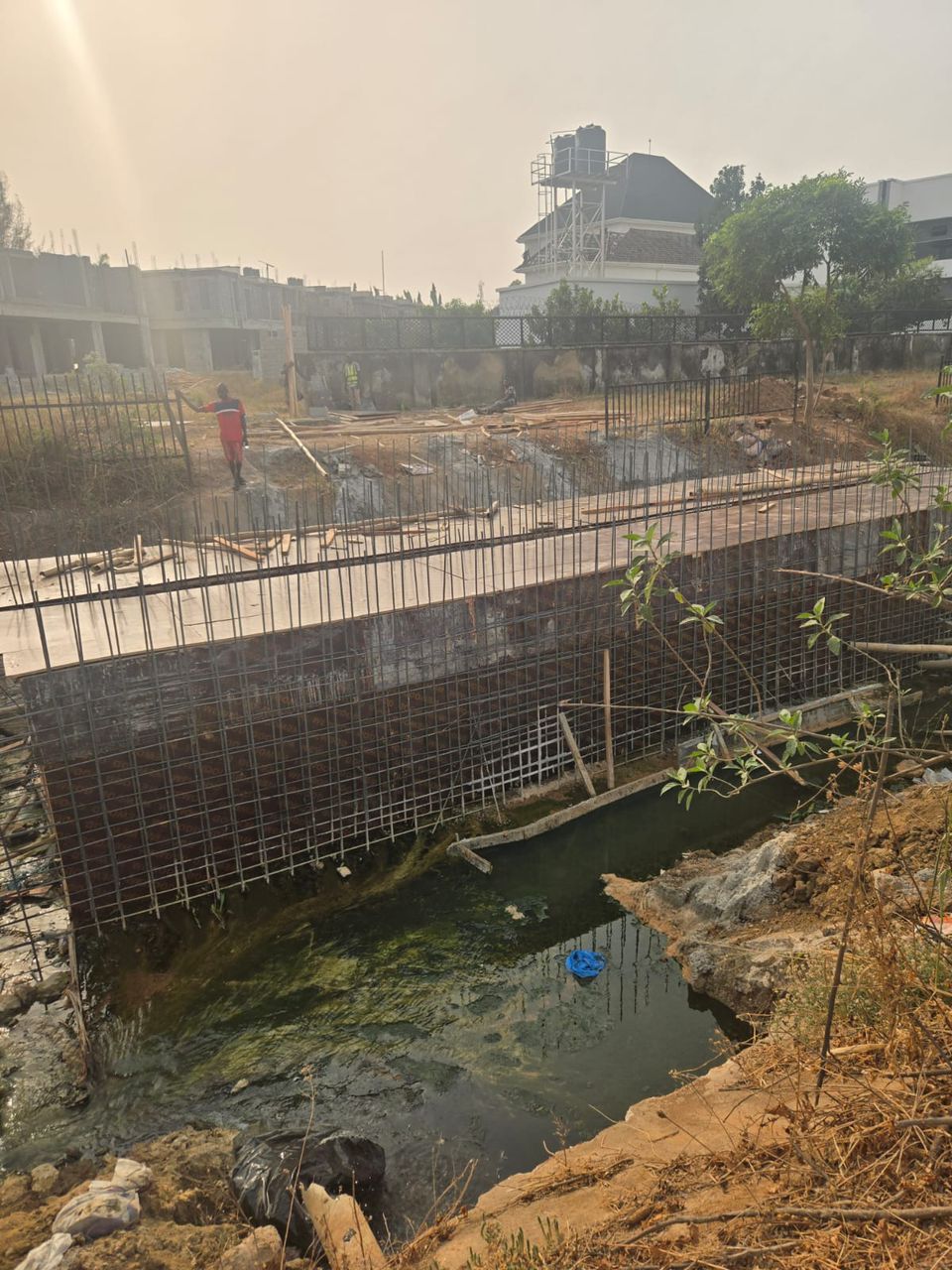
SaharaReporters learnt that the development has raised concerns among residents, who warn that the project could lead to severe flooding and long-term environmental degradation in one of Abuja’s most prestigious districts.
Reacting to developments on Friday, Nigerian human rights activist and lawyer Deji Adeyanju condemned the construction, describing it as an act of institutionalised greed that places private profit above public safety and environmental sustainability.
Adeyanju explained that developers had fenced off the green area and commenced massive construction activities, despite the land’s original designation as a non-developable zone.
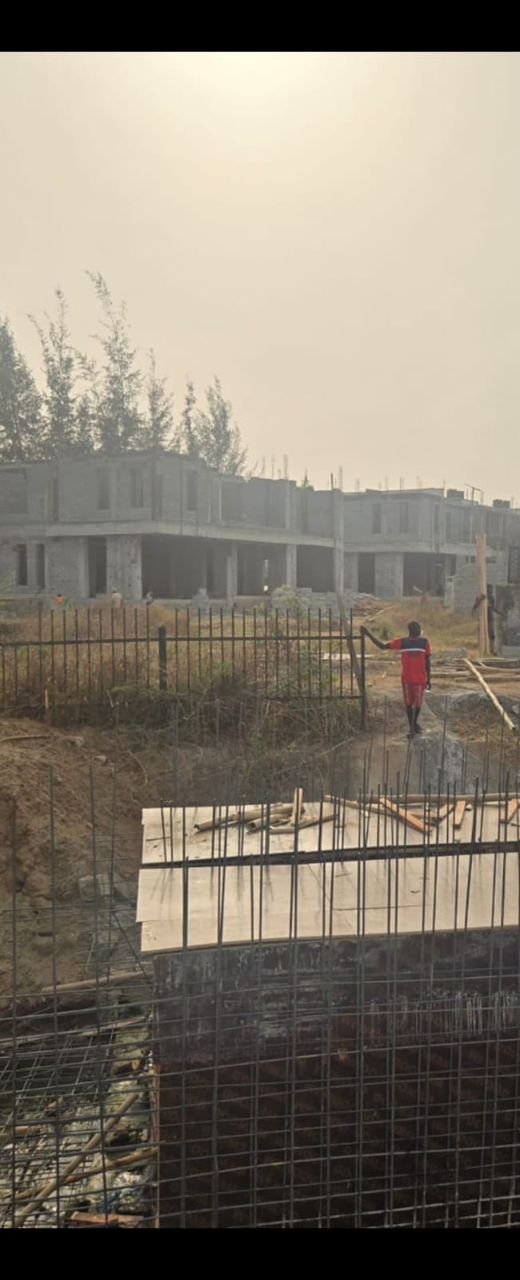
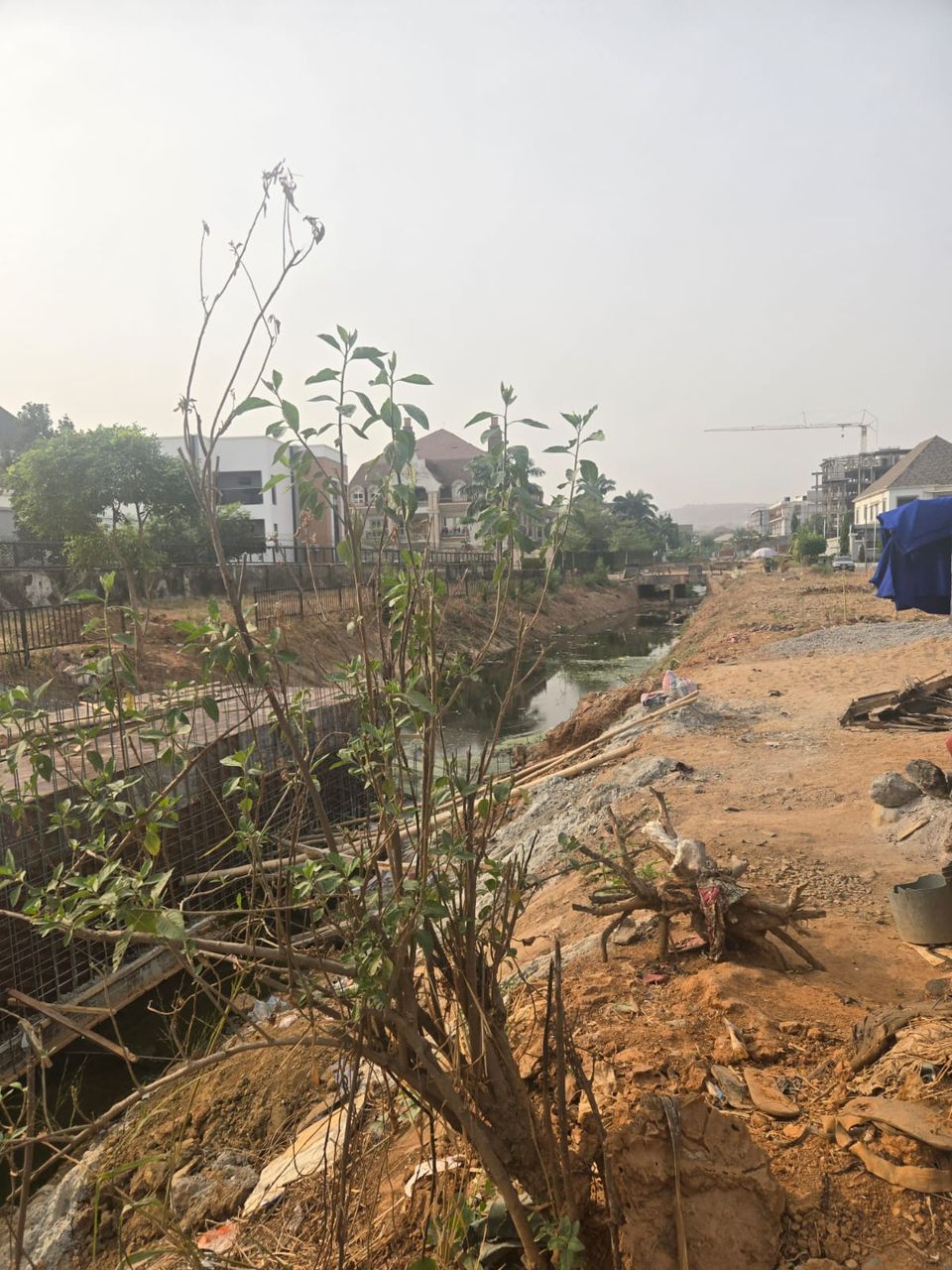
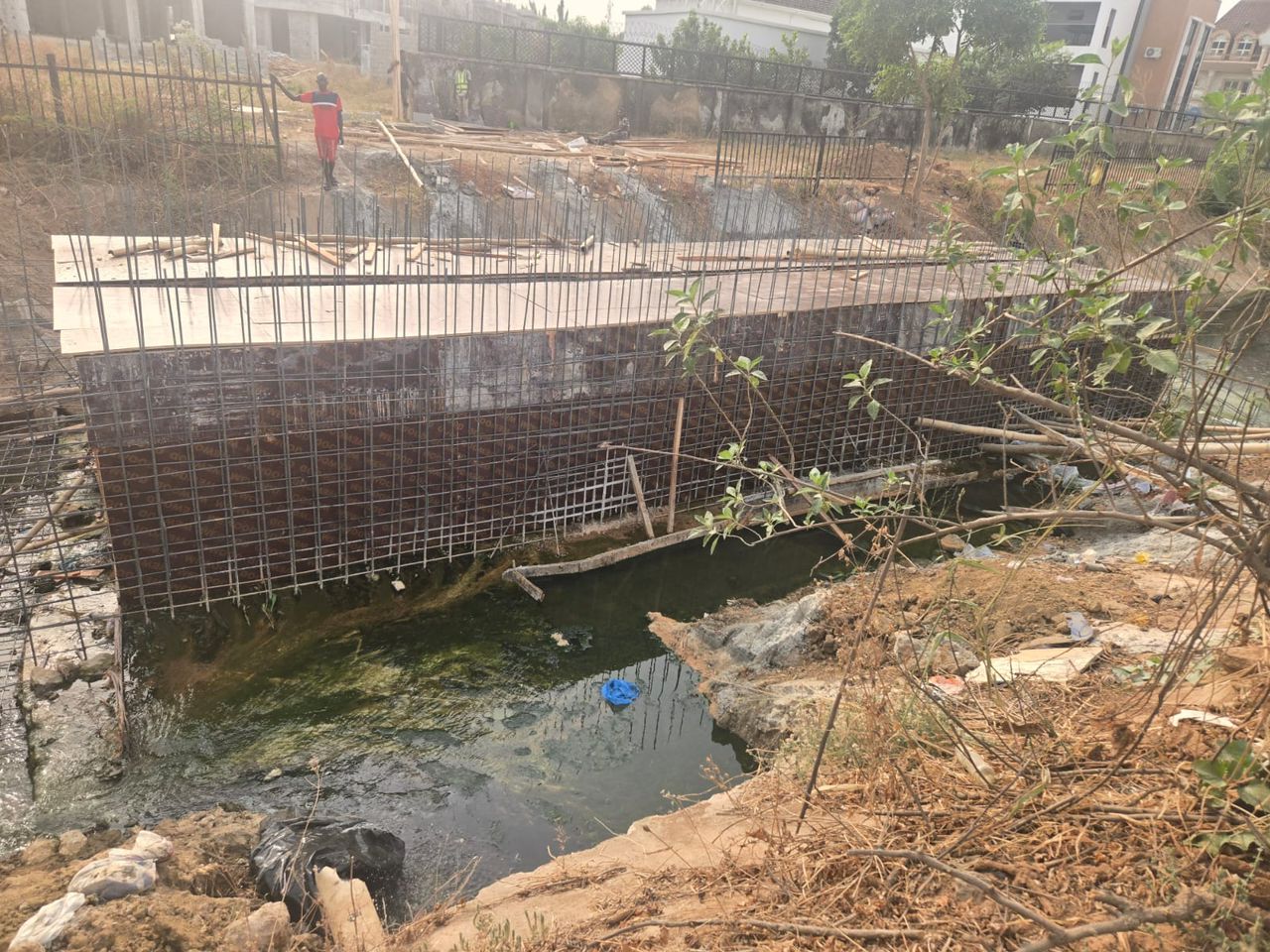
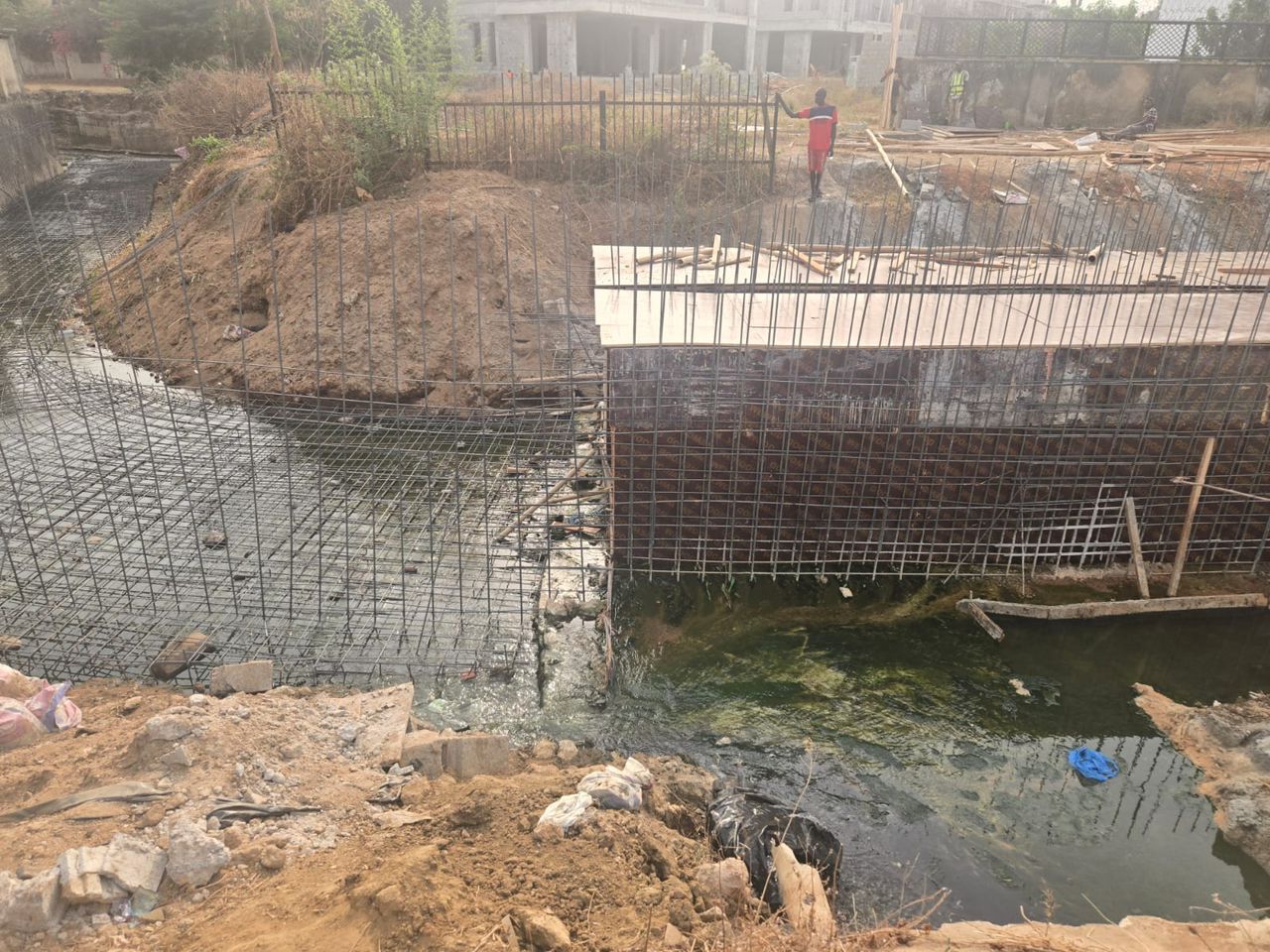
Even more disturbing, he said, is the fact that the developers, having realised that the estate has no approved access road, have allegedly resorted to converting a natural water channel into a makeshift road.
“I have just discovered that about 20 duplexes are being constructed on a designated green area in Maitama Extension,” Adeyanju said.
“Even more alarming is the fact that the developers have now realised there is no access road to the estate and have resorted to converting a canal into a road.”
According to him, the canal in question serves as a natural drainage channel for the area, especially during the rainy season, and tampering with it could spell disaster for residents of Maitama Extension and adjoining communities.
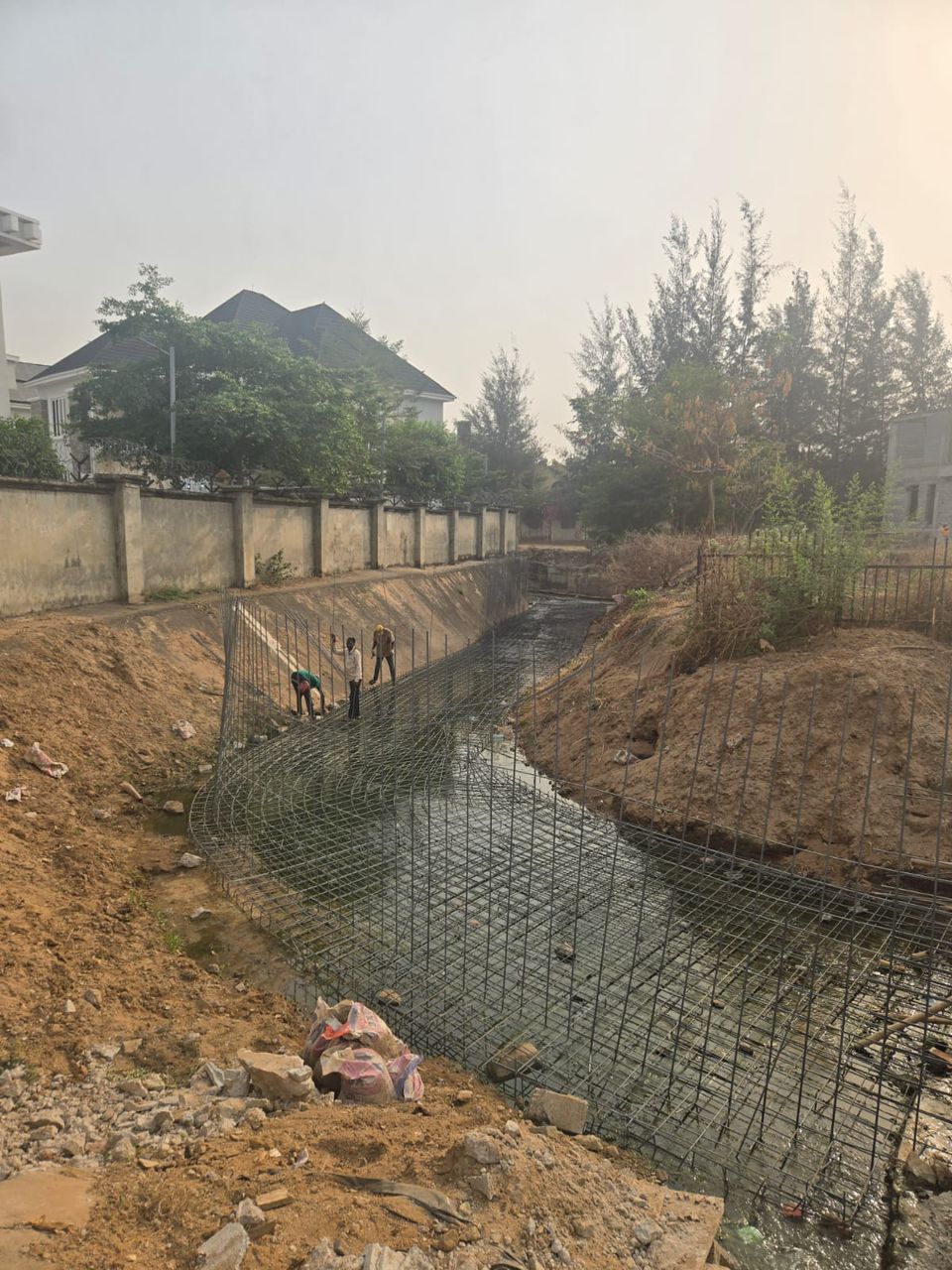
“One can only imagine the environmental disaster and severe flooding that Maitama Extension will face during the rainy season. How do you fence off a green area and then proceed to turn a natural water channel into a road, all in the name of greed?”
Green areas within Abuja are protected under the Abuja Master Plan and are designed to prevent erosion, manage stormwater, preserve ecological balance, and enhance the city’s livability.
“This is a blatant distortion of the Abuja Master Plan,” Adeyanju stated. “It raises serious questions about how Development Control could have approved such a project in the first place.”
Adeyanju expressed fear that unchecked construction on green zones would worsen flooding, damage roads, and reduce property values.
When SaharaReporters contacted Mr. Lere Olayinka, the Senior Special Assistant to the FCT Minister, he said that even if one were to assume, without conceding, that the land in question was changed from a green area to residential use, the minister has the authority to approve such a change.
“Let me explain something to you. First of all, I have been out of the country recently, so I’m not fully aware of the specific issue you are referring to. Secondly, Maitama is not just one location. When you say ‘Maitama,’ you need to be specific because it covers several areas,” he said.
Olayinka explained that to properly respond, he would need to contact the Department of Development Control to obtain accurate information.
“What I want you to understand is that land use is not static; it is not something that can never be changed. Land use can be altered. Even as a private individual, you may decide today to build a bungalow on a plot of land and later decide to change it to another type of building, provided the necessary approvals are obtained,” he added.
When told that the area in question is reportedly a green zone, described as a canal, Olayinka responded: “When you refer to a green area, that means a location designated for non-residential use, such as parks, recreation, or sports facilities, where housing is not originally permitted. However, it is the responsibility of the FCT Administration to make such designations, and it is also within the powers of the FCT Minister to approve changes in land use.
“Let me give you an example. In some central areas, individuals who were allocated land strictly for residential purposes went ahead on their own to convert them to commercial use.
“Some built hotels, schools, and shopping complexes. Rather than penalizing them, the government later asked them to formally regularize the change of land use.
“So, changing land use is not something to sensationalize or treat as if a crime has automatically been committed. Government planning evolves. Today, an area may be designated for roads, and 10 or 20 years later, that plan may change. You can see this in road expansions across Nigeria, where single-lane roads are later expanded to multiple lanes.”
“Change of land use is therefore not an offence in itself. I’m explaining this so that unnecessary controversy is avoided,” he said.
Olayinka insisted that the minister has the authority to approve changes in land use, saying, “Governments have always exercised this power, designating areas for estates, recreation, or commercial purposes, and modifying those plans when necessary. As long as a change of use is properly approved, there is nothing illegal about it.”
When asked whether the minister personally approved the said land for the new development, Olayinka said he could not confirm that information.
He said, “I cannot confirm that over the phone. I do not work in the land department. Being the minister’s spokesperson does not mean I have information on every single issue. If you are saying the minister approved it, I would need concrete details to verify that claim.”
“Unfortunately, FCT workers are currently on strike, so accessing files is even more difficult at the moment,” he added.
Controversies Involving Wike As FCT Minister
In September 2025, SaharaReporters reported that human rights activist Omoyele Sowore had petitioned the Attorney General of Florida, James Uthmeier, seeking the forfeiture and prosecution of Wike over illicit property acquisitions in the United States.
In the petition dated September 22, 2025, and signed by his lawyer, Deji Adeyanju, Esq., Sowore accused Wike of secretly purchasing multi-million-dollar real estate in Florida using suspicious cash transactions designed to conceal the source of funds.
According to the petition, Wike, alongside his wife, Justice Eberechi Suzzette Nyesom-Wike of Nigeria’s Court of Appeal, purchased three luxury lakeside properties in Winter Springs, Seminole County, Florida, valued at over $6 million.
The petition listed the properties as 113 Springcreek Lane, Winter Springs, FL 32708, which is a 5,000 sq. ft. residence purchased in cash for $535,000 and transferred to Jordan Wike (25); 209 Hertherwood Court, Winter Springs, FL 32708, which is a 3,401 sq. ft. home acquired for $459,157 in cash and transferred to Joaquin Wike (23); and 208 Hertherwood Court, Winter Springs, FL 32708, which is a 3,901 sq. ft. home bought for $465,000 in cash and transferred to Jazmyne Wike (20).
Sowore’s lawyers said the purchases were executed through quit claim deeds between July 2021 and September 2023 and transferred directly to Wike’s children. They argued that the cash-only acquisitions bypassed banking oversight and raised “serious money laundering concerns.”
Breach of Nigerian and U.S. Laws
According to the petition, Wike failed to declare these foreign assets to Nigeria’s Code of Conduct Bureau (CCB) as required under the Constitution.
It further noted that his legitimate income as a public servant since 1999 could not sustain such multi-million-dollar acquisitions.
The petition argued that the transactions violated both Florida state law and U.S. federal anti-money laundering statutes, specifically citing the Florida Money Laundering Act (Chapter 896.101, Fla. Stat.), the Florida Contraband Forfeiture Act, and federal laws under 18 U.S.C. §§ 1956 and 1957.
It also referenced the U.S. Department of Justice Kleptocracy Asset Recovery Initiative, which targets assets linked to corrupt foreign officials.
Since his appointment as FCT Minister, Wike has faced a series of allegations ranging from land racketeering to abuse of office and autocratic leadership.
For instance, Wike has been at the centre of a land racketeering scandal, with reports of irregular land allocations in Abuja and plots being distributed to family members, allies, and associates rather than through transparent, lawful processes.
In June 2025, the Peoples Gazette started a series of reports, accusing Wike of abusing his office by allocating sprawling hectares of Abuja’s most valuable lands to his son, Joaquin Wike.
This was revealed in an exclusive report by the newspaper, which cited inside sources and official documents to support this staggering abuse of power orchestrated by the FCT Minister.
The report revealed that Wike, since assuming office in August 2023, had signed off on over 2,000 hectares of prime real estate to his son.
It revealed that to achieve this, the minister bypassed regulations and skipped payment of critical fees, contrary to the Nigerian Constitution and the principles of civil service ethics.
The Peoples Gazette stated that these allocations spanned some of Abuja’s most exclusive districts, including Maitama, Asokoro, Guzape, Bwari, and Gaduwa.
In July 2025, the minister was also accused of allocating prime Abuja lands to his family members and friends.
According to documents cited by Peoples Gazette, Wike signed 33 approvals for land allocations to his family and friends, including his 90-year-old father, Joshua Nlemanya Wike, who received a plot of land in Guzape II worth N400 million.
The allocations, which were made on July 16, 2025, also included lands for Wike's paternal cousin, Believe Wike; nephew, Victor Wike; nephew, Henry Wike; and cousin, Enwusonye Promise Wike. Other beneficiaries included eight family members of James Hunwo, who received individual allocations on the same day.
In April 2025, reports revealed that six of his family members, including his brothers and sisters, were allocated lands in Guzape II.
The beneficiaries were Vincent Ejike Wike, Chidi Sam Wike, Chituru Wike, Christian Ibebulachi Wike, Collins Ngeme Wike, and Emmanuel Okanwene Wike.