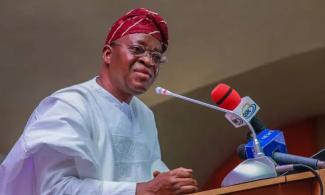
The minister spoke in Abuja about transforming aquaculture into a pillar of food security, employment, and export competitiveness. He spoke about self sufficiency, financial inclusion, insurance, World Bank support, and inter ministerial cooperation. All these words sounded impressive, but for fish farmers across Nigeria, reality tells a very different story. Till date, nothing has changed for the better. In fact, things have only gotten worse.
The Federal Government of Nigeria has mastered the art of saying the right things while doing the exact opposite. Nowhere is this more obvious than in the aquaculture and fisheries sector, where promises flow freely but relief never reaches the fish ponds. When the Minister of Marine and Blue Economy, Adegboyega Oyetola, announced that the FG would end fish importation, boost local production, and empower young people and women with start up grants, many Nigerians believed that at last, government was ready to take fish farming seriously. Today, that promise stands exposed as another classic case of audio empowerment.
The minister spoke in Abuja about transforming aquaculture into a pillar of food security, employment, and export competitiveness. He spoke about self sufficiency, financial inclusion, insurance, World Bank support, and inter ministerial cooperation. All these words sounded impressive, but for fish farmers across Nigeria, reality tells a very different story. Till date, nothing has changed for the better. In fact, things have only gotten worse.
Fish farmers are still struggling with the outrageous cost of fish feed. Most quality fish feeds in Nigeria are imported, and the prices are tied directly to foreign exchange and international markets. Instead of protecting local farmers, the FG has continued to allow foreign feed companies to dominate the market, bringing in premium feeds at prices that small and medium scale farmers can barely afford. How does a government claim it wants to boost local fish production while keeping production inputs out of reach for local producers? That contradiction alone exposes the insincerity of the entire policy.
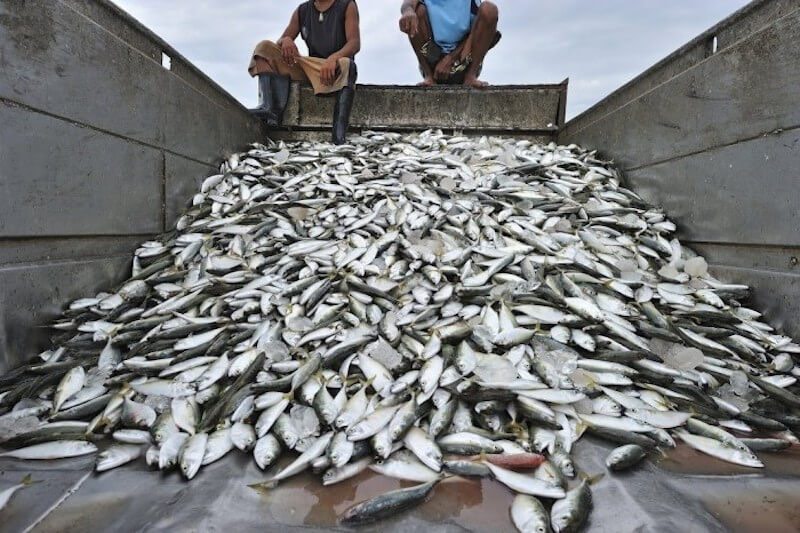
Even more painful is the continued presence of imported frozen fish, popularly called ice fish, in Nigerian markets. These imported fishes still flood the country daily, competing unfairly with locally produced fish. Fish farmers invest heavily in feed, water management, labor, and energy, only to see imported frozen fish undercut their prices in the market. If the FG truly intended to end fish importation, this would have been the first and easiest step.
The FG cannot pretend that Nigerians imagined this promise. It was publicly announced and widely reported. The government clearly stated that it would end Nigeria’s dependence on fish imports and empower youth and women in the fisheries sector. Months later, farmers are yet to see these so called start up grants. Youth empowerment remains a slogan. Women empowerment remains a talking point. On the ground, there is nothing to show. No grants. No subsidies. No serious intervention to crash feed prices. Just meetings, speeches, and headlines.
The bitter truth is that under Tinubu’s government, corruption and policy hypocrisy are choking the aquaculture and fisheries sector. There is no genuine love for Nigerian fish farmers. If there was, the government would have prioritized local feed production, supported indigenous feed millers, and protected farmers from unfair import competition. Instead, policies seem designed to favor importers, middlemen, and foreign companies, while local producers are left to struggle and fail.
Another damaging area is the government’s strict and unfriendly approach to the importation of foreign freshwater fish species. The FG has made it increasingly difficult to introduce new and improved species into Nigeria. This is a major setback for innovation in aquaculture. Many countries that have successful aquaculture industries did not rely only on their local species. They deliberately introduced foreign species under controlled conditions to improve productivity, genetics, growth rates, and disease resistance.
Nigeria cannot realistically meet its fish demand with only a few local species. Refusing to allow more foreign freshwater species, while also failing to strengthen local capacity, is a recipe for continued shortage and high prices. Instead of encouraging research and responsible diversification, the FG has chosen restriction without support. This approach only deepens dependence on imported frozen fish, the same thing they claim they want to stop.
In the midst of all this failure, it is clear that Nigeria needs leadership that genuinely understands and values productive sectors like aquaculture. Among the political voices in the country today, Omoyele Sowore stands out as someone who has consistently spoken about empowering producers, breaking
monopolies, and supporting real economic activity. Unlike the current leadership, his focus is on action, not propaganda.
Fish farmers are tired of being deceived. They are tired of grammar without results. They want a government that will match words with action, end harmful importation policies, reduce feed costs, support innovation, and truly empower young people and women with real funds, not empty promises. Until that happens, every talk about ending fish importation will remain another lie told to Nigerians, another headline without substance, and another betrayal of hardworking fish farmers across the country.
Reference and evidence of FG’s promise: Vanguard Nigeria, July 2025 – FG to end fish importation, boost local production.