
The nurse, a Chief Nursing Officer (CNO), narrated that the crisis began after a disagreement over the lack of water in the clinic due to an ongoing industrial action affecting utilities. According to her, a doctor had earlier approached her regarding water for clinical activities, and she advised that management be formally informed rather than turning patients away.
Mrs Odusola Oluwakemi, a senior nursing officer and widow, at Federal Medical Centre (FMC), Abeokuta, has accused the Head of Nursing Services (HNS), Mrs Fagoyinbo Abosede, of public humiliation, verbal abuse, and physical assault during an official meeting, an incident she says triggered a hypertensive crisis that left her hospitalised with severe bleeding.
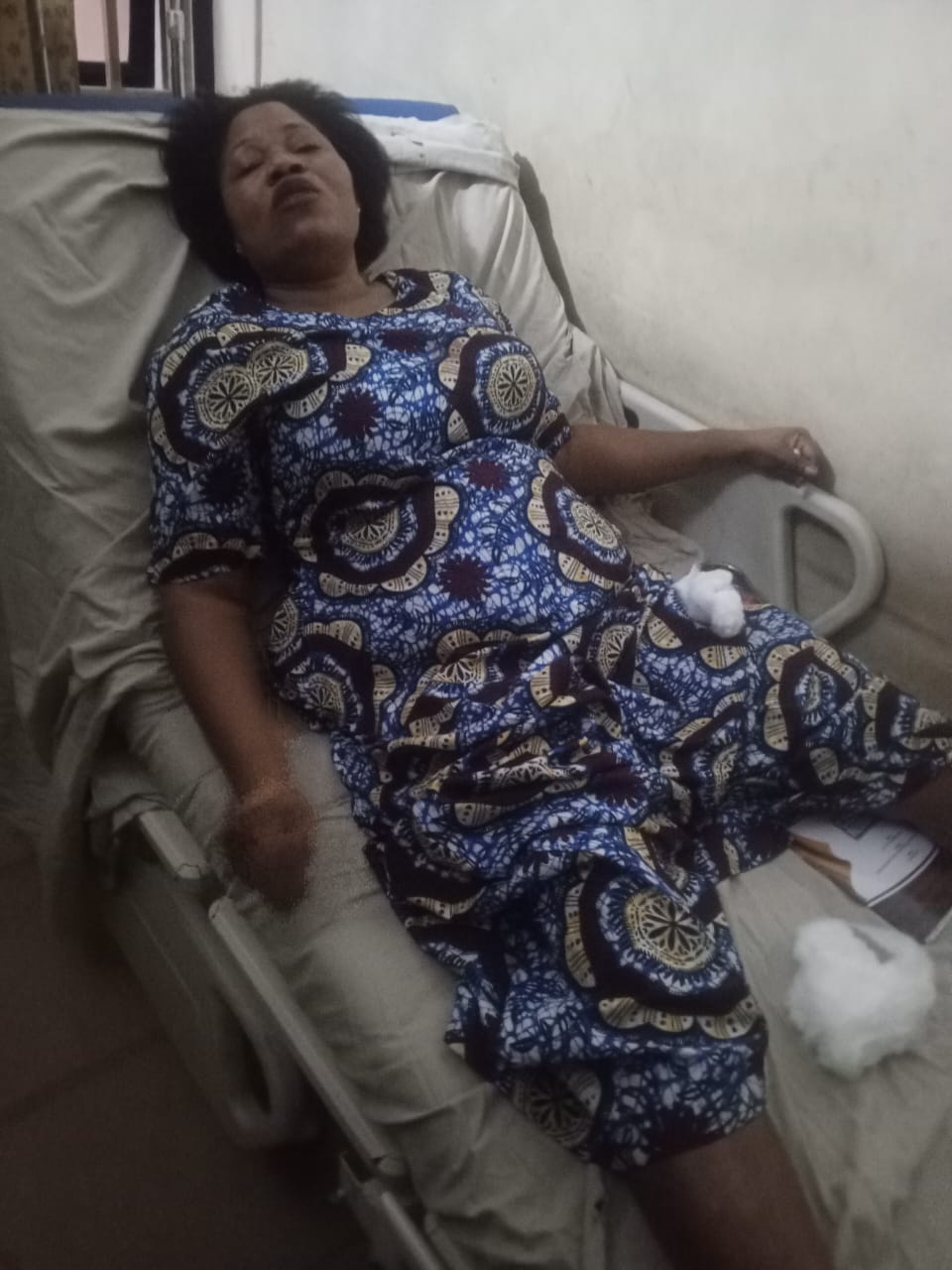
The nurse, a Chief Nursing Officer (CNO), narrated that the crisis began after a disagreement over the lack of water in the clinic due to an ongoing industrial action affecting utilities. According to her, a doctor had earlier approached her regarding water for clinical activities, and she advised that management be formally informed rather than turning patients away.
She said this advice ultimately led to management arranging water supply after a consultant intervened, and all patients were attended to.
However, matters escalated later during a routine “rapport” meeting attended by over 15 nurses. She said she was asked to explain what transpired, which she did. The meeting reportedly agreed to formally write management to ensure regular water supply.
She alleged that when the Head of Department, Abosede, arrived later, the tone of the meeting changed dramatically.
“The HOD singled me out, criticised how I was sitting, and demanded that I repeat my account,” she said. “After narrating the same facts, she verbally abused me, saying I lacked common sense and mocking my career progression.”
The nurse further alleged that her widowhood and inability to further her education due to caring for three children in university were used against her during the meeting.
“She humiliated me in front of my juniors and colleagues, saying my mates were now ADNs and DNs while I remained a CNO,” she said.
She denied claims that the Medical Director (MD) had called her and that she had been rude on the phone, insisting no such call took place. She said when she objected to the insults and asked the HOD not to personalise the issue, the exchange became heated.
According to her, senior colleagues asked her to step outside to de-escalate the situation, but she alleged the HOD physically pushed her back into the room.
“She pushed me and I staggered. I challenged her, telling her that civil service rules do not permit physical contact,” she said.
The nurse said the incident caused her to break down in tears, particularly after alleged references were made to her late mother and family health issues. She said she became breathless during the confrontation and was rushed to the staff clinic.
At the clinic, her blood pressure was found to be dangerously high. She said she was treated and monitored for hours and eventually sent home due to the absence of doctors overnight, a situation she attributed to ongoing industrial action and security concerns.
In the days that followed, she said her condition worsened. She reported recurrent nosebleeds, which she initially managed at home, but said the bleeding became severe by Sunday.
“I started bleeding profusely from my nose and mouth. As a medical professional, I knew it was life-threatening,” she said.
She said her daughter and a nearby nurse rushed her to a city hospital for emergency care.
The nurse also alleged that despite management being informed she had been rushed to the clinic, the HOD did not contact her to ask about her health. Instead, she said she received queries demanding written explanations while she was still unwell.
She added that after she shared her experience on a staff platform out of fear that she might not survive to tell her story, a director contacted her and asked her to pull down the post, assuring her management would handle the matter.
Although she complied, she alleged that efforts are now underway to manipulate the narrative. “They are circulating false reports, claiming management gave me internal memos or that the matter has been resolved. This is not true,” she said, accusing unnamed individuals of using informal blogs to misrepresent the incident.
The nurse says she is still receiving treatment and remains traumatised by the incident, insisting that she is seeking justice and accountability.
“I do not want to lie against anyone,” she said. “I only want the truth to be known.”
However, Mrs Fagoyinbo Abosede denied the allegations that she physically assaulted a senior nurse, Odusola, describing the claims as “false, malicious and unbalanced.”
Speaking with SaharaReporters on Thursday, the nursing director said the allegations stemmed from a professional investigation into what she described as a serious lapse in duty that allegedly resulted in patients being turned away from care.
According to her, the issue was brought to her attention by the Medical Director, who called to complain that patients, particularly those requiring catheter changes at the surgical outpatient clinic, were allegedly sent home because nurses claimed there was no water.
She said the nurse at the centre of the controversy, whom she identified as the most senior officer on duty that day, failed to prepare necessary solutions ahead of time and did not escalate the challenge through proper channels.
“For a nurse who is professionally and ethically sound, you do not wait until a doctor comes before you report challenges on duty,” she said. “If there is no water, you report immediately to your superiors. That is standard procedure.”
The director explained that she convened an emergency meeting of nursing leaders to investigate the incident, insisting the meeting was held in an official setting and not as a form of harassment.
“She was questioned, just like others. She became argumentative and eventually walked out of the meeting,” she said. “There was no physical contact. I did not touch her. I am a professional nurse and I know my limits.”
She added that other nurses queried during the investigation accepted responsibility and pledged to improve, but claimed the complainant resisted accountability.
The nursing director also dismissed claims that the nurse’s subsequent health crisis was caused by the meeting, noting that the nurse has a known history of hypertension.
“She had epistaxis (nose bleeding), which is common in hypertensive patients,” she said. “This should not be turned into an allegation of assault.”
She further alleged that the nurse later took to internal platforms and social media to accuse management of assault, prompting widespread reactions before management could formally address the issue.
“I was at home on Sunday when calls started coming in, asking me to check FMC platforms,” she said. “What was posted was a one-sided narrative.”
The director insisted that due process was followed, including issuing a formal query, and that the matter was being handled administratively.
“I have over 900 staff members under my supervision,” she said. “If I were the kind of person being portrayed, it would be impossible to manage an institution like this.”
As of the time of filing this report, FMC management had yet to issue an official public statement on the matter, while the nurse at the centre of the allegations maintains that she was verbally humiliated and physically pushed during the meeting.