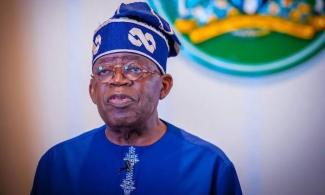
The National Security Adviser (NSA), Nuhu Ribadu, made the declaration at the end of the first session of the U.S.–Nigeria Joint Working Group on Religious Freedom and Security, held in Abuja.
The President Bola Tinubu-led Nigerian government has stated that any act of violence framed along religious lines will be treated as a direct attack on the Nigerian state, as his government grapples with growing concerns over faith-based killings and insecurity across the country.
The National Security Adviser (NSA), Nuhu Ribadu, made the declaration at the end of the first session of the U.S.–Nigeria Joint Working Group on Religious Freedom and Security, held in Abuja.
Ribadu said Nigeria’s plural nature makes the protection of all citizens, Christians, Muslims and adherents of other beliefs, “non-negotiable,” stressing that the government would not tolerate attempts to exploit religion to fuel violence.
“Nigeria is a deeply plural society, and the protection of all citizens—Christians, Muslims, and those of other beliefs—is non-negotiable,” Ribadu said.
“Violence framed along religious lines is treated as an attack on the Nigerian state itself.”
He said the government’s approach to insecurity goes beyond military force, combining security operations with the rule of law, humanitarian safeguards and strategic communication to ensure public trust and national cohesion.
“Our response integrates security operations, rule of law, humanitarian safeguards, and strategic communication, ensuring that operational successes translate into public confidence and strengthened social cohesion,” he added.
The meeting, held on January 22, followed the United States’ designation of Nigeria as a Country of Particular Concern under the International Religious Freedom Act, a move that has drawn international attention to attacks on vulnerable communities, particularly Christians.
The Joint Working Group was established to deepen bilateral cooperation aimed at reducing religiously motivated violence, strengthening accountability for attacks and improving civilian protection.
Nigeria’s delegation was led by Ribadu and included officials from several ministries and security agencies, while the U.S. delegation was headed by the Under Secretary of State for Political Affairs, Allison Hooker, alongside representatives of multiple U.S. federal agencies.
Hooker said the United States recognises Nigeria’s diversity and the complexity of its security challenges, noting that sustained cooperation is critical to protecting civilians and upholding freedom of religion.
She said the Working Group provides a platform to move beyond expressions of concern to practical actions that deter violence, strengthen investigations and ensure perpetrators are held accountable.
Ribadu, however, insisted that Nigeria’s engagement with international partners, including the United States, was already producing results, citing improved coordination among security agencies and increased pressure on terrorist and criminal groups.
“We want Nigerians to know that this partnership is working, that it is delivering tangible gains, and that our collective efforts will continue to yield positive gains,” he said.
Security analysts say the government’s framing of religious violence as an attack on the state signals heightened concern over the use of religious identity by extremist and criminal groups to sow division and undermine national unity.
Both countries agreed to continue engagements under the Joint Working Group, with the next meeting expected to hold in the United States on a date to be determined through diplomatic channels.