“The term of office of judges, their independence, security, adequate remuneration, conditions of service, pensions and the age of retirement shall be adequately secured by law.”
Principle 11, United Nations Basic Principles on the Independence of the Judiciary, (1985)
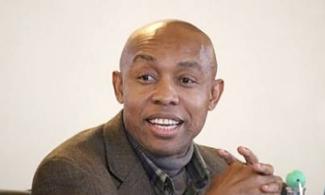
Babajide Candide-Johnson became a judge of the High Court of Lagos State at 45. The son of the third Chief Judge of Lagos State, he is polyglot; fluent in several languages, including French. When his judicial tenure came to an end on 27 June 2021, 20 years after he became a judge, Babajide Candide-Johnson was the head of the family court in the High Court of Lagos State.
At his retirement, the Chief Judge of Lagos State, Kazeem Alogba, described Babajide Candide-Johnson as “a brilliant, hardworking, meticulous and fearless judge, an intellectual who delivered judgments without fear or favour.”
Those words describe a model judge. Yet, nine months later, in March 2022, he was back in court, this time to sue the government of Lagos State, whom he had served without blemish in judicial office for two decades, for “his pension, severance gratuity, and other entitlements.”
The government of Lagos State initially demurred, disingenuously arguing that responsibility for judicial pensions under the Pension Right of Lagos State Judicial Officers Law of 2015, lay with the state Judicial Service Commission. The state government later saved itself from a public unraveling of an embarrassing position and the parties agreed to an amicable settlement.
In 2022 alone, at least five other former judges of the High Court of Lagos also sued the State government over the same issue.
The year before the retirement of Babajide Candide-Johnson in Lagos, 22 retired judges of the High Court of Abia, the self-described “God’s own State” in south-east Nigeria, had similarly sued before the National Industrial Court of Nigeria, (NICN), claiming to have been shafted by a succession of three governors going back nearly a decade and a half, who claimed mandates from God to ruin the state. It appears that in response to the case, the then state government “reportedly promised to pay N10 million to the retired judges every month, but only did so for one month.”
Three years after this case began, it was still stuck in the NICN, with little progress. Meanwhile, five of the retired judges had died in penury while waiting for the case to rescue them. In May 2023, Abia State installed a newly elected governor. Two months later, he and the retired judges reached an agreement to clear the back-log of 16 years of judicial pensions liability.
Around the country, retired judges are increasingly resorting to judicial proceedings to call attention to a crippling and chronic crisis of judicial pensions for judges who retired before June 2023. In Ondo State, retired judges sued in April 2016 for similar issues. Their peers in Imo, Ogun, and Oyo have as well.
For long, the constitution provided for how to compute judicial pensions but not necessarily for how to finance or administer it effectively. Effective from June 2023, a new constitutional amendment transferred to the National Judicial Council (NJC), responsibility for the administration of judicial pensions. This has not, however, alleviated or addressed the crisis of judicial pension obligations arising from before thenand may, indeed, have surfaced new problems of its own.
In Kogi, eight retired judges of the state High Court have recently served notice on the state government of their intention to return to court as litigants to enforce their pension rights. They include a former Chief Judge of the State John Bayo Olowosegun; a former President, Customary Court of Appeal, Hon. Justice Yunusa Musa; and a former senior judge, Professor Andrew Alaba-Ajileye.
The NJC has to accept some responsibility for the historical liabilities. It has been an indifferent and perfunctory advocate for retired judges. On his way out of office as then chairman of the NJC and Chief Justice of Nigeria and after much hand-wringing, Olukayode Ariwoola, in January 2023 finally tabled the issue before the Council at its 100th meeting.
In a statement at the end of the meeting, the Council described as “worrisome, the situation whereby many Judicial Officers of the States are being owed their retirement benefits, including severance pay/gratuity and pensions”, and warned that this undermined the rule of law without clearly saying how so.
Even worse, the Council failed to disclose which states were involved, for how long or by how much. Instead, the NJC directed State Chief Judges from across the country to report on compliance with this resolution without indicating what it had previously done to compute the quantum of liabilities involved.
On the whole, the NJC lost an opportunity to show that it cared about the subject matter; that it had indeed bothered to do its homework; or that this was an issue on which it desired to enlist any support or reinforcement for the affected retired judges. Since then, the Council does not appear to have seriously monitored or re-engaged with this issue.
The consequences of the chronic accumulation of pension debts in the public service are quite corrosive of both morale of existing personnel and effectiveness of service delivery. Serving officers just need to behold that situation in order to appreciate the urgency of the need to take their own destinies into their own hands while they still have the opportunity to do so.
The judiciary presents a somewhat special case because the average age of intake into the bench of the superior courts of record is higher than in any other branch of pensionable service in Nigeria. The consequences of the deliberate neglect to fulfill pension obligations can, therefore, be quite dire. In States, like Taraba in the north-east, for instance, many judges who retired before 2023 have died waiting endlessly for their pensions and terminal benefits.
The uncertainties about judicial benefits have also created other problems of their own, with crooks cashing in on the vulnerabilities of retired judges. In March 2024, the NJC went public with the complaint that “fraudsters had been bombarding retired judges with phone calls demanding various sums of money to help them fast-track the payment of their retirement benefits.” It vowed that the Council “would never demand money from any judicial officer to fast-track the payment of his retirement benefits.” The jury, at best, is still out on this.
The problem remains that this crisis of judicial pensions and terminal benefits fosters a system of perverse incentives conducive to bartering judicial outcomes for material benefit.
Some may view as uncharitable a strand of public opinion that suggests that there is a Law of Karma at work and that the destitution of retired judges in this way is the natural consequence of a deepening crisis of judicial integrity and politicization of the judiciary. Others have gone as far as to accuse judges indiscriminately of feeding upfront while in service the political lion with the menu of their pensions.
Even if the conduct of some judges in service could conceivably deserve the attentions of a hypothetical Karma, there remain many judges who do their best not to fall into that category. Such points of view should, however, demonstrate for all involved the urgency of addressing this issue with finality.
For the judiciary, it is existential at both personal and institutional levels. For the citizens and court users, it is the only way to guarantee the possibility of minimal credibility to the work of the courts. For the country, it should ensure that the promise of an independent judiciary stands a chance of not disintegrating into a constitutional hoax. The distinction between judges who retired before June 2023 and those retiring thereafter is artificial and unnecessary. The NJC can work constructively with government at the federal and state levels to close it.
A lawyer and a teacher, Odinkalu can be reached at [email protected]