The groups in separate statements warned that continued market closures and threats of sanctions against traders could escalate tensions and violate fundamental rights.
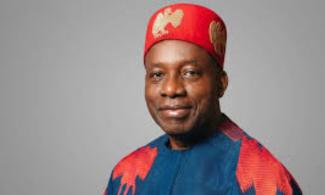
The Igbo Community Association, Federal Capital Territory (FCT), and the Rule of Law and Accountability Advocacy Centre (RULAAC), have called on Anambra State Governor, Professor Chukwuma Soludo, to urgently reopen the Onitsha Main Market and adopt dialogue-driven approaches to address the sit-at-home crisis.
The groups in separate statements warned that continued market closures and threats of sanctions against traders could escalate tensions and violate fundamental rights.
The Igbo Community Association, in their statement signed by President and Secretary Generals, Engr. Ikenna Ellis-Ezenekwe, and Mazi Emmanuel Chinwoke Onah respectively, commended Governor Soludo for what it described as his “tireless efforts to drive development and progress” in Anambra State, noting that his infrastructural and policy initiatives have placed the state on a strong developmental footing.
However, the group urged the governor to heed growing public discontent over the closure of markets in Onitsha following protests linked to the sit-at-home phenomenon.
“The people want their markets back; they belong to them,” the association said. “The people also want to use the markets to make whatever statements they choose, and as a true son of the soil, you must respect this.”
The association expressed concern over reports of residents taking to the streets in protest, warning that continued closure of the markets could lead to a breakdown of law and order, with possible injuries and destruction of property.
“We want harmonious engagement, not brute force,” the statement added, calling on the governor to reopen the markets immediately and pursue a peaceful resolution.
Similarly, in a separate statement titled “Onitsha Market Closure and the Criminalisation of Victims of Insecurity,” RULAAC condemned what it described as the punitive treatment of traders who stay away from their shops on Mondays due to fear of violent reprisals from criminal elements enforcing sit-at-home orders.
RULAAC in the statement signed by its Executive Director, Okechukwu Nwanguma, acknowledged that the sit-at-home practice has inflicted severe economic damage on the Southeast but stressed that traders’ compliance is largely driven by fear rather than support for the action.
“When traders defy sit-at-home orders issued by separatist agitators and enforced by criminal elements, they are often attacked, intimidated, or killed,” Nwanguma said. “Compliance is not an exercise of free will but a survival strategy.”
He argued that sealing the Onitsha Main Market and threatening prolonged closure or demolition amounts to “double punishment” of victims, first by criminals and then by the state.
“The state cannot lawfully or morally punish victims for the consequences of its own failure,” Nwanguma said, adding that the government’s primary duty is to protect lives and property.
RULAAC also criticised police warnings against protests, insisting that peaceful protest is constitutionally guaranteed and that security agencies are obligated to protect, not suppress, civic expression.
While acknowledging Governor Soludo’s possible intention to restore economic activity and public order, the rights group cautioned that coercive measures could portray the government as hostile to its own citizens.
“What is required is engagement, not escalation,” Nwanguma said, urging the state government to work with traders’ unions, market leaders, civil society groups, and security agencies to develop a credible, confidence-building strategy to address insecurity and the sit-at-home challenge.
“A democratic government must never punish people for being afraid when it has failed to make them safe,” RULAAC concluded.