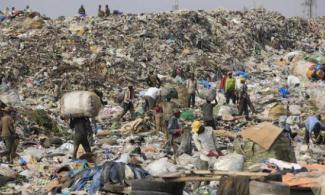
Nwapa also highlighted the human tragedy unfolding at the dumpsite, where several impoverished Nigerians have built shanties directly on the refuse.
The #EndMalariaInNigeria campaign has raised the alarm over a looming public health disaster in the Ile-Epo community, Lagos State, resulting from a massive refuse dumpsite in the community.
The convener of the campaign, Francis Nwapa, in a release issued on Wednesday, said the decades-old dumpsite, located dangerously close to a busy market, exposes traders, consumers, and food items to pests, rodents, flies, and relentless mosquito bites.
According to Nwapa, market traders have been forced to adapt to the unbearable stench, a situation normalised by years of government neglect.
“What should outrage any responsible government has been ignored for decades,” Nwapa said.
Nwapa also highlighted the human tragedy unfolding at the dumpsite, where several impoverished Nigerians have built shanties directly on the refuse.
He said that a visit to the community by the #EndMalariaInNigeria campaign revealed that residents cook, bathe, and carry out daily activities on the waste heap.
According to him, women were seen breastfeeding infants on the site, while a makeshift local cinema operates to offer brief respite from the harsh living conditions.
“This is not resilience, it is survival forced by systemic failure,” Nwapa said.
He said sources revealed that the Lagos Waste Management Authority (LAWMA) has allegedly stopped evacuating waste to the site.
However, decades of accumulated, largely non-biodegradable refuse continue to pollute the air, soil, and groundwater, while providing a breeding ground for disease-carrying pests.
The health implications, Nwapa warned, are severe, stressing that residents of the dumpsite, nearby communities, and market users face daily exposure to malaria, cholera, Lassa fever, dysentery, and other communicable diseases.
“In a city that prides itself as a megacity, this level of environmental degradation is unacceptable,” Nwapa said.
“Preventable diseases and deaths will continue to rise annually if this crisis is ignored.”
Beyond Ile-Epo, Nwapa noted the proliferation of refuse across streets and major roads in Lagos, calling it a “ticking time bomb” for public health.
“Open dumping creates ideal breeding spaces for mosquitoes and other disease-carrying pests, directly undermining any claim of malaria reduction in the state,” Nwapa stated.
The group called on the Lagos State government to urgently rethink waste management by adopting modern, scientific, and people-centred systems, rather than half-measures driven by profit.
The group urged the Lagos State government to “Immediately clear and remediate long-standing dumpsites; relocate and provide safe housing for people living on refuse sites; enforce proper waste segregation, recycling, and disposal systems, and prioritise public health over political patronage.”
Nwapa stressed, “Environmental neglect is not just an eyesore; it is a killer. If Lagos continues on this path, malaria and other preventable diseases will remain a permanent feature of life. Government must act now; lives depend on it.”