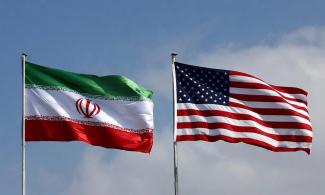
The U.S. deployment of additional military assets to the Gulf follows nationwide protests in Iran, which sparked the country’s deadliest crackdown since the 1979 Islamic Revolution.
Iran’s Foreign Minister, Abbas Araqchi, told state media on Wednesday that he has not had any recent contact with U.S. special envoy Steve Witkoff, nor requested negotiations.
The statement comes after U.S. President Donald Trump announced that another “armada” was heading toward Iran, urging Tehran to strike a deal with Washington, according to Reuters.
The U.S. deployment of additional military assets to the Gulf follows nationwide protests in Iran, which sparked the country’s deadliest crackdown since the 1979 Islamic Revolution.
"There was no contact between me and Witkoff in recent days and no request for negotiations was made from us," Araqchi told state media.
According to Araqchi, various intermediaries were "holding consultations" and in contact with Tehran.
"Our stance is clear, negotiations don't go along with threats and talks can only take place when there are no longer menaces and excessive demands," he said.
On Tuesday, Iran’s President Masoud Pezeshkian told Saudi Arabia’s Crown Prince Mohammed bin Salman that Tehran welcomes any initiative, within the bounds of international law, aimed at preventing war.
Earlier, Trump announced that a “massive armada” of American naval forces was heading toward Iran, delivering an urgent warning to Tehran to negotiate on its nuclear programme or risk a potentially devastating military response.
In the message posted on his Truth Social Platform, Trump said the fleet, led by the aircraft carrier USS Abraham Lincoln, was moving “quickly, with great power, enthusiasm, and purpose.”
He described it as larger than a previous naval deployment sent toward Venezuela.
He said, “A massive Armada is heading to Iran. It is moving quickly, with great power, enthusiasm, and purpose. It is a larger fleet, headed by the great Aircraft Carrier Abraham Lincoln, than that sent to Venezuela.
“Like with Venezuela, it is, ready, willing, and able to rapidly fulfill its mission, with speed and violence, if necessary. Hopefully Iran will quickly "Come to the Table" and negotiate a fair and equitable deal - NO NUCLEAR WEAPONS one that is good for all parties.”
Trump also referenced a past U.S. military campaign against Iranian nuclear infrastructure, which he labelled “Operation Midnight Hammer,” and warned that the next attack would be worse if Iran again rejects negotiations.
“Time is running out, it is truly of the essence! As I told Iran once before, MAKE A DEAL! They didn't, and there was "Operation Midnight Hammer," a major destruction of Iran. The next attack will be far worse! Don't make that happen again,” he wrote.
In June 2025, the U.S. military struck three Iranian nuclear facilities, which Trump described as a “spectacular military success.”
Trump announced the strikes had destroyed Iran’s nuclear weapons capacity, though analysts noted the long-term impact remained unclear.
The attack came amid escalating tensions between Israel and Iran, with Washington debating whether to intervene. Trump ultimately chose direct military action, plunging the U.S. into a wider conflict.
While Trump hailed the operation as decisive, experts warned it risked destabilizing the region further and questioned whether Iran’s nuclear program was truly neutralized.
On January 3, 2026, after months of U.S. airstrikes on Venezuelan ports, Trump ordered a large-scale overnight raid in Caracas. President Nicolás Maduro and his wife, Cilia Flores, were captured in a heavily fortified presidential palace. They were flown to a U.S. warship, then transferred to New York.
Maduro and Flores were arraigned in U.S. federal court on drug trafficking and related charges.
Trump praised the operation as one of the most “stunning and powerful displays of American military might.”