Falana further relied on Section 36(6)(c) of the 1999 Constitution (as amended), which guarantees every person charged with a criminal offence the right to defend himself in person or by legal practitioners of their own choice.
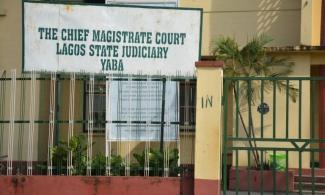
Proceedings at the Yaba Magistrate Court, Lagos, on Thursday witnessed intense legal arguments after the prosecution objected to the appearance of the human rights lawyer and Senior Advocate of Nigeria (SAN), Femi Falana, as defence counsel for protesters arrested during an anti-demolition demonstration in Lagos State.
At the commencement of the hearing, the prosecutor urged the court to disqualify Falana from appearing in the matter, arguing that a Senior Advocate of Nigeria is barred from appearing before an inferior court.
The prosecutor relied on the decision of the Court of Appeal in Registered Trustees of ECWA Church v. Ijesha (1999), where it was held that a SAN cannot appear before a Magistrate's Court in Nigeria.
However, in his reply, Falana contended that the authority cited by the prosecution was not applicable in Lagos State.
He argued that Section 9 of the Lagos State Magistrates’ Court Law clearly provides that all legal practitioners called to the Nigerian Bar, regardless of rank, title, or seniority, are entitled to appear before any Magistrate's Court within the state.
Falana further relied on Section 36(6)(c) of the 1999 Constitution (as amended), which guarantees every person charged with a criminal offence the right to defend himself in person or by legal practitioners of their own choice.
He stressed that any restriction based on a lawyer’s rank would amount to a violation of that constitutional right.
Falana also cited the decision in Attorney General of Lagos State v. Persons Unknown (2016), where the court held that the rank of SAN cannot prevent a lawyer from appearing in any court in Lagos State.
He added that the objection by the prosecutor was surprising, noting that the same prosecutor is handling the case of Commissioner of Police v. Seun Kuti, in which he and another Senior Advocate of Nigeria, Adeyinka Olumide-Fusika (SAN), are defence counsel, without any challenge to their appearance.
In her ruling, Magistrate I. O. Alaka dismissed the prosecutor’s objection, holding that any lawyer who has been called to the Nigerian Bar is competent to appear before a Magistrate's Court in Lagos State, and that the rank of SAN does not constitute any restriction.
Following the court ruling, Falana applied for bail for the defendants and urged the court to grant them bail in liberal terms, arguing that the charges were illegal and amounted to an attempt to criminalise peaceful protest.
He reminded the court that the Court of Appeal, in IGP v. ANPP (2008), had affirmed the right of Nigerians to assemble and protest peacefully and had directed the National Assembly to amend the Public Order Act to reflect that right.
Falana further drew the court’s attention to Section 83(4) of the Police Establishment Act 2020, which mandates the police to provide security once they are notified of a public meeting, rally, or procession.
"Where a person or organization notifies the police of his or its intention to hold a public meeting, rally or procession on a public highway or such meetings in a place where the public has access to, the police officer responsible for the area where the meeting rally or procession will take place shall mobilize personnel to provide security cover for the meeting, rally or the procession," Section 83(4) of the Police Establishment Act 2020 provides.
Falana told the court that the protesters had duly notified the police of their intention to protest against incessant forced evictions and demolitions in Lagos communities and that the police initially provided security as required by law.
According to him, the police later breached the law by dispersing the peaceful protesters, during which the defendants and other protesters were brutalised and arrested, while some protesters were injured with teargas and live ammunition.
“Your Honour, the charge cannot stand as it is an attempt to criminalise peaceful protest in Nigeria,” Falana said, adding that he had handled the IGP v. ANPP case from the Federal High Court to the Court of Appeal.
The Magistrate, however, advised Falana to confine his submissions to the bail application and reserve objections challenging the competence of the charge for the trial stage.
Falana explained that his submissions were aimed at strengthening the bail application and proceeded accordingly.
Though the bail application was strongly opposed by the prosecutor, the court granted the defendants, Hassan Taiwo, popularly known as Soweto, and Dele Frank bail in the sum of ₦200,000 each.