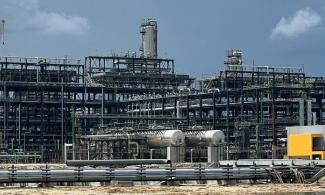
They noted that Dangote’s refinery, with its 650,000 barrels per day capacity, operates as a single-train facility, meaning the entire output depends on one processing line.
Some petroleum marketers across the downstream oil industry, along with industry experts and unions have expressed concerns about the incessant price instability and uncertainty in the supply, distribution, and retailing of petroleum products across the country.
They noted that the worrisome trend is creating panic in the industry, noting that it also underscored the structural factors bedevilling the sector over the last year.
Speaking with newsmen in Lagos State, the marketers warned against the looming danger allegedly posed by Dangote Refinery’s "single-train structure and unstable pricing regime" warning that Nigeria could be plunged into a major economic crisis if urgent corrective measures are not taken.
The independent marketers highlighted the recent confusion in the petroleum industry, noting "that the refinery’s ex-depot price jumped from ₦699 to ₦799, while pump prices have epileptically jumped from ₦731 to ₦920."
"This is epileptic pricing that creates uncertainty for marketers and consumers alike. We cannot be engaging in restrictive business practices, including monopolistic tendencies that can pose as barriers to entry for other players," a marketer, Audu Ibrahim noted.
The marketers warned that such anti-competitive behaviour discourages investment, creates price wars, and ultimately undermines the sustainability of the petroleum sector.
“Petroleum is a macro product; its behaviour affects all other products, including food. If competition laws and PIA provisions are not strictly enforced, businesses will collapse and the economy will suffer,” another marketer cautioned.
They noted that Dangote’s refinery, with its 650,000 barrels per day capacity, operates as a single-train facility, meaning the entire output depends on one processing line.
"This design leaves the refinery vulnerable to disruptions, as any technical fault could halt production entirely.
“The catalytic unit is already down. This shows the danger of relying on a single train. Nigeria requires about 70 million litres per day according to updates by NMPDRA, but Dangote is currently supplying less than 35 million litres. This shortfall exposes the country to energy crises,” Audu Ibrahim added.
The unions urged the Nigerian government and the National Assembly to enforce strict compliance with PIA laws, stressing that the legislation was designed to ensure a “win-win” situation for all stakeholders in the petroleum industry.
They also noted that unless the refinery adopts a multi-train structure and pricing transparency, Nigeria’s petroleum supply-demand balance could collapse, triggering wider economic instability.