AP reports that Iranian Foreign Ministry spokesman Esmail Baghaei confirmed on Monday that the summons began on Sunday and continued into the new week, describing the EU action as “illegal, unreasonable and very wrong.”
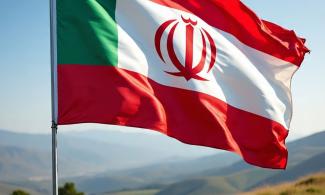
Iran has summoned all European Union ambassadors in Tehran to protest against the bloc’s decision to designate the Islamic Revolutionary Guard Corps (IRGC) as a terrorist organisation, a move that has further escalated tensions amid fears of a wider Middle East conflict.
AP reports that Iranian Foreign Ministry spokesman Esmail Baghaei confirmed on Monday that the summons began on Sunday and continued into the new week, describing the EU action as “illegal, unreasonable and very wrong.”
“A series of actions were reviewed, various options are being prepared and sent to relevant decision-making bodies,” Baghaei said, adding that Tehran would soon decide on “reciprocal measures.”
The diplomatic standoff comes as Iran faces growing international pressure over its violent crackdown on nationwide protests in January, during which thousands were reportedly killed and tens of thousands detained. Human rights groups have also raised alarm over possible mass executions of detainees.
Last week, the EU agreed to blacklist the IRGC over its role in the repression. While largely symbolic, the designation adds to economic and political pressure on Tehran, given the Guard’s deep involvement in Iran’s economy. The United States and Canada had previously taken similar steps.
Iran’s parliament speaker, speaking on Sunday, responded defiantly, declaring that the Islamic Republic now considers all EU militaries to be “terrorist groups,” citing a 2019 Iranian law.
Meanwhile, military tensions are mounting. The United States has deployed the aircraft carrier USS Abraham Lincoln and several guided-missile destroyers to the Middle East.
Although it remains unclear whether President Donald Trump will authorise military action, Washington says the deployments are meant to deter further violence and protect international shipping.
“Trump is trying to calibrate a response to Iran’s mass killing of protesters that punishes Iranian leaders without dragging the United States into a new, open-ended conflict,” the New York-based Soufan Center said in a statement on Monday.
It added that while some aides want to exploit Tehran’s vulnerability, U.S. conditions for diplomacy are “unacceptable” to Iran.
Adding to regional anxiety, Iran confirmed that a military drill by the Revolutionary Guard in the Strait of Hormuz is underway. The narrow waterway handles about a fifth of global oil shipments. Iran had warned shipping last week of planned exercises, though it initially avoided confirming their start.
Satellite imagery analysed by the Associated Press showed small fast-moving vessels, believed to belong to the Guard, operating between Iran’s Qeshm and Hengam islands, away from main commercial lanes.
The U.S. Central Command has warned Tehran against harassing warships or disrupting commercial traffic.
Despite the rising rhetoric and military manoeuvres, Baghaei sought to play down fears of war, telling Iranians not to worry, though he declined to say whether Washington had issued Tehran any deadline to meet U.S. demands.
The IRGC, created after Iran’s 1979 Islamic Revolution to protect the clerical regime, has evolved into a powerful military, political and economic force. Its Basij militia is widely accused of leading the violent suppression of recent protests, with leaked videos showing armed men beating and shooting demonstrators after authorities shut down internet and phone services across the country.