Outrage has erupted on social media, where Nigerians are accusing the state government of silence during the initial days of the carnage.
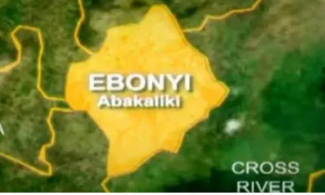
A communal conflict has turned Ebonyi State’s Amasiri community into a "killing field," with reports of dozens massacred and thousands of residents fleeing into nearby bushes for safety.
The violence, which has entered its fourth day of a total shutdown, has sparked a firestorm of outrage on social media, with Nigerians accusing both the state and federal governments of turning a blind eye to the carnage.
The conflict, which involves a complex web of land disputes, has pitted the Amasiri clan against several neighbouring communities, including Ọkpọrọjọ/Idima (Oso Edda), Amangwu, Ehugbo, Ibii, and Akpọha.
While official police reports have confirmed at least four gruesome beheadings in the Okporojo community, witnesses and digital activists are raising the alarm that the death toll is significantly higher.
Outrage has erupted on social media, where Nigerians are accusing the state government of silence during the initial days of the carnage.
"Three days of total shutdown and ‘dozens massacred,' yet the timeline is quiet? This is terrifying," posted one X user.
Another X user, identified as Alex Onyia, reported that their representative was "hiding in the bush" as the situation worsened daily.
Another user whose handle is @Smartek2050, described the situation as a total collapse of state authority.
"This is no longer a 'communal issue,' it’s a full-blown humanitarian crisis. Where are the security agencies? Government legitimacy starts with protecting citizens. What’s happening in Amasiri is a failure of that duty,” the X user said.
The violence reportedly stems from a protracted boundary dispute between the Ndukwe and Ihie communities in Amasiri and Oso-Edda over the ownership of the Okporojo area.
Eyewitness Accounts
The scale of the violence was underscored by Onyia (@winexviv), who revealed that the situation has forced even observers into hiding.
"There is serious crisis in Amasiri in Ebonyi state and all school and markets have been shut down for 3 days now. Dozens of persons have been massacred. Our ISEE representative in Ebonyi who happened to be in Amasiri is currently hiding in the bush. It’s getting worse every day," he raised the alarm.
The danger extends even to professionals working in the region.
@Lord_haywire07 shared a chilling near-miss experience while working on a land survey, saying, "If not for wisdom, I would have been a victim of these people while carrying out a massive setting-out for a stone quarry which would affect lands from Amasiri and Akpoha.
“I went in with one person from both sides and when one side attempts to attack me, the other stands for me."
A Call for Modern Conflict Resolution
The resurgence of communal warfare has led many Ebonyi indigenes to lament what they describe as a "regression" into primitive violence.
An X user @MaziOkigbo said, "Ebonyi can't make 10 steps forward and communal violence take us 12 steps back. These are no longer the era of Aguleri-Umuleri, Ezza-Ezillo... type sh*t. There are better ways to resolve conflicts."
Echoing this sentiment, @Olynwaoma, an Ebonyi indigene, called for an immediate cessation of hostilities and a multi-stakeholder intervention.
"As an Ebonyi son, my heart bleeds. We need an immediate ceasefire, dialogue led by traditional rulers and churches, swift deployment of neutral security forces, protection for civilians, and independent investigation. Perpetrators must face justice," the X user said.
SaharaReporters learnt that the current "war" is not a single-front battle but a coordinated series of clashes involving Amasiri and five other territories: Amasiri vs. Ọkpọrọjọ/Idima (Oso Edda, Afikpo South); Amasiri vs. Amangwu (Afikpo South); Amasiri vs. Ehugbo (Timber Shade, Afikpo North); Amasiri vs. Ibii (Afikpo North); Amasiri vs. Akpọha (Afikpo North).
Governor Nwifuru’s ‘Hammer’
Following an on-the-spot assessment of the violence in Okporojo on Saturday, January 31, 2026, Governor Francis Ogbonna Nwifuru declared that he had been "pushed to the wall."
In a series of sweeping and controversial punitive measures, the governor sacked all political appointees of Amasiri extraction, including the State Commissioner for Tertiary Education, Prof. Amari Omaka (SAN).
He also dethroned the traditional rulers of the Amasiri clan and withdrew their certificates of recognition and dissolved all village leadership structures, including development unions, women, and youth groups in Amasiri.
In addition, the governor imposed a 20-hour daily curfew (from 2 p.m. to 10 a.m.) on the community and ordered the immediate closure of all schools and the Amasiri Development Centre.
"At the end of the day, those who started this violence will regret it," Governor Nwifuru warned.
Humanitarian Crisis and Allegations of ‘Collective Punishment’
While the Governor maintains these actions are necessary to restore order, human rights lawyer Maduabuchi Idam has petitioned the National Security Adviser (NSA) and the Chief of Defence Staff, describing the measures as "draconian" and "illegal."
Idam argued that the governor is meting out "collective punishment" based on unverified assumptions, noting that many innocent residents are now victims of mass arrests and economic displacement.
As of Monday evening, security agencies, including the Police Mobile Force (PMF) and the Nigerian Army have intensified their presence in the area.
Ten suspects have already been arrested in connection with the beheadings, but for the residents hiding in the forests of Amasiri, the nightmare is far from over.