The National President of the union, Chief Gbenga Awoyale, described the practice as one of the gravest threats to public safety and a failure of regulation and political will.
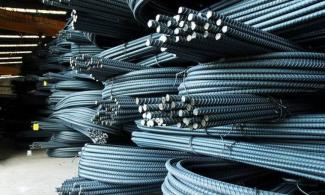
The Iron Rod and Steel Dealers Employers Union of Nigeria, has raised a fresh alarm over the continued production and circulation of substandard iron rods in the country.
The National President of the union, Chief Gbenga Awoyale, described the practice as one of the gravest threats to public safety and a failure of regulation and political will.
Awoyale, a stakeholder in Nigeria’s construction and manufacturing sector, made the call in a statement issued on Tuesday, saying the problem has persisted for years despite repeated warnings, legislative debates, and public outcry, with recent incidents once again highlighting the human cost of inaction.
“The persistent production and circulation of substandard iron rods in the Nigerian market remains one of the gravest threats to public safety,” the statement said, adding that “recent events once again underscore the tragic cost of inaction.”
The statement followed the collapse of a three-storey building in Rivers State, which left several Nigerians injured.
According to Awoyale, the incident was not isolated but part of a recurring pattern across different states and administrations.
“The collapse of a three-storey building in Rivers State, with several Nigerians injured, is not an isolated occurrence,” he said. “It is part of a disturbing pattern that has repeated itself across states and administrations.”
He argued that official findings linking building collapses to the use of substandard materials merely confirm what has long been known within the industry and acknowledged by policymakers.
“These tragedies are not acts of fate; they are the outcomes of systemic regulatory failure and deliberate compromise,” the statement said.
While noting that the issue has received attention within the National Assembly, Awoyale said such awareness has not translated into decisive action.
He referenced past interventions by lawmakers including Hon. Zainab Gimba, Chairman of the House Committee on Steel Development, Hon. Billy Osawaru, and Hon. Yinka Aluko, who have publicly warned about the dangers posed by substandard iron rods.
“Their interventions, alongside media investigations and stakeholder engagements, demonstrate that the scale and gravity of the problem are well understood at the highest levels of government,” the statement said.
Despite this, Awoyale expressed concern that legislative and oversight efforts have remained ineffective. He noted that several attempts by the National Assembly to summon regulatory institutions, particularly the Standards Organisation of Nigeria (SON), had reportedly been frustrated by non-appearance and institutional resistance.
“What is deeply troubling is the apparent reluctance of the National Assembly to take critical action in response to this refusal to honour legislative summons, despite its constitutional authority to do so,” he said, adding that the failure has “weakened oversight, emboldened regulatory impunity, and allowed dangerous practices to continue unchecked.”
The union leader also recalled that over the years, bills seeking to prohibit the manufacture, importation, and sale of substandard products have been debated but stalled.
“Industry players, including iron rod dealers and manufacturers, have consistently called for a clear legal framework that would empower regulators and punish offenders,” the statement said, noting that despite repeated warnings issued by state governments after building collapses, “buildings continue to fail, and Nigerians continue to pay with their lives and livelihoods.”
Awoyale further alleged that enforcement of standards has been compromised within SON, particularly in Lagos State, Nigeria’s industrial hub.
“There have been credible instances where discreet oversight visits by SON’s top hierarchy from Abuja were allegedly compromised at the state level,” he said. In one such instance, the head of SON in Lagos State “reportedly alerted manufacturers ahead of inspections, leading them to halt production temporarily and conceal non-compliant practices.”
According to him, such actions explain why enforcement exercises yield little result while substandard iron rods remain readily available in the market.
The statement also raised concern over what it described as dual production practices by some manufacturers.
“Evidence from within the industry indicates that some manufacturers deliberately produce substandard iron rods for domestic consumption while exporting standard-compliant products to neighbouring West African countries,” Awoyale said. “This practice exposes a cruel reality: the technical capacity to meet standards exists, but Nigerian lives are discounted because the system allows it.”
Calling for urgent action, Awoyale demanded the immediate removal of the head of SON in Lagos State to allow for an independent investigation and urged the National Assembly to assert its oversight authority.
“This statement is issued in sorrow, not hostility,” he said, stressing that “a nation cannot claim progress while its buildings collapse under the weight of corruption.”