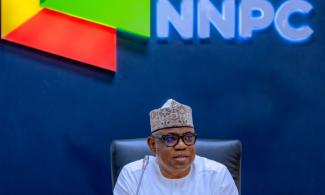
Ojulari made the revelation in Abuja while speaking during a fireside chat titled “Securing Nigeria’s Energy Future” at the Nigeria International Energy Summit 2026.
Bayo Ojulari, the Group Chief Executive Officer of the Nigerian National Petroleum Company Limited (NNPCL), on Wednesday said that the Nigeria-owned oil company operated the country’s refineries at a “monumental loss” to the country, forcing his management team to suspend operations to halt further financial drain.
Ojulari made the revelation in Abuja while speaking during a fireside chat titled “Securing Nigeria’s Energy Future” at the Nigeria International Energy Summit 2026.
Speaking on the commercial realities facing the NNPCL’s refining assets, Ojulari said the public outrage over the refineries was understandable, given the scale of public investment and the long-standing expectation that the facilities would support domestic fuel supply.
“On the refineries, Nigerians were angry. A lot of money has been spent, and expectations were very high. So we were under extreme pressure, extreme pressure,” Ojulari said, according to The PUNCH.
He explained that when he assumed office, refining was not his core area of experience, having spent most of his professional career in the upstream sector.
However, he noted that leadership responsibility required rapid learning and decisive action.
“My background is upstream, so I was on a vertical learning curve. You are accountable, so you must learn very quickly. Otherwise, there is no escape,” the NNPCL boss said.
Ojulari said a detailed review of refinery operations by his team quickly revealed the depth of the financial losses being recorded by the company.
“The first thing that became clear, and I want to say this very clearly, is that we were running at a monumental loss to Nigeria. We were just wasting money. I can say that confidently now,” he said.
He disclosed that although crude oil was being supplied regularly to the refineries, utilisation levels remained between 50 and 55 per cent, leading to continuous value erosion.
“We were spending a lot of money on operations, a lot of money on contractors. But when you look at the net, we were just leaking away value,” Ojulari said.
He added that the situation was worsened by the absence of a clear recovery pathway that could justify continued operations.
“Sometimes you make a loss during investment, but you have a line of sight to recovery. That line of sight was not clear here,” he said.
Ojulari said the decision to halt refinery operations was one of the first major steps taken by his administration to prevent further losses and reassess the viability of the facilities.
“We decided to stop the refinery and do a quick check. We planned that if things were lined up, we would reopen and work on them,” he said.
He further noted that the quality and value of refined products also contributed to the losses, citing the Port Harcourt Refinery as an example.
“The crude we were taking into Port Harcourt was producing mid-grade products. When you aggregate their value compared to what you put in, it was a waste,” he said.
Ojulari acknowledged that the move attracted political pressure, as NNPC had traditionally been compelled to keep refineries operational to ensure fuel availability.
“There were political pressures to keep the refinery product, lots of pressure. But when you have been trained for over 35 years to focus on commerciality and profitability, you can’t sleep with that,” he said.
Nigeria operates four state-owned refineries, two in Port Harcourt, as well as facilities in Warri and Kaduna, which have struggled for decades with inefficiency despite repeated turnaround maintenance programmes costing billions of dollars.
At various times, the refineries have operated at single-digit capacity or been shut down entirely, forcing Africa’s largest oil producer to rely heavily on imported petroleum products.