According to him, the attackers went from house to house demanding to know the whereabouts of men before killing them in front of their families.
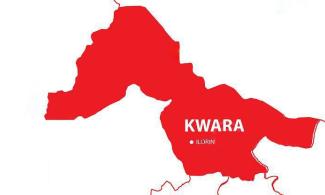
A resident of the Kwara State community attacked by a group of terrorists days ago has disclosed that the assailants who killed more than 100 people spoke a local language associated with the Republic of Benin, selectively targeted men for execution, and spared women during the massacre.
Muhammed Aliyu, who spoke during an interview session with News Central which SaharaReporters monitored on Thursday, described a horrific scene of mass killings, exhaustion among villagers tasked with burials, and widespread displacement following the assault.
“We have buried 78 people already, and I also participated in the burial ceremony. There are still some that we were yet to bury because people already fled their homes. Those burying people are already tired. We are still recovering some corpses as I am speaking. And they took the Emir’s wife and kids into the bush,” Aliyu said.
He added that the community has not been able to give many victims proper burial due to fear and fatigue.
“We have buried 78, but we still have many yet to be buried because people are tired. This is the first of its kind and it is really terrible. In the whole of Nigeria, this is the most terrible terror attack,” he said.
Aliyu further revealed that survivors told him the attackers communicated in a language believed to originate from neighbouring Benin Republic, raising concerns about possible cross-border infiltration.
“There are some of the survivors that I helped to the main town. They said some of these terrorists were speaking a local language from Benin Republic,” he stated.
According to him, the attackers went from house to house demanding to know the whereabouts of men before killing them in front of their families.
“That the terrorists were asking for their husbands, they later found these husbands and killed them all in the presence of their wives. Surprisingly, they did not touch women but they slaughtered and shot any man that they saw during the attack,” Aliyu said.
He lamented what he described as the government’s inadequate response to the growing insecurity in the region.
“This issue of insecurity is now becoming more bigger than how the government is handling it. The government is trying but it is not enough. We need them to do more,” he added.
SaharaReporters had earlier reported that residents of Kaiama and surrounding communities had repeatedly raised alarm over the presence and movement of suspected terrorists in forests around their villages long before the deadly attack.
Multiple residents told SaharaReporters on Thursday that youths in the area had consistently alerted traditional rulers, local government officials and the Kwara State Government about strange armed men camping in nearby bushes, but their warnings were allegedly ignored.
“Before these attacks happened, our youths went to the traditional ruler many times to report that strange people were gathering inside the forest close to our villages,” one resident said.
“They did not only stop there. They also informed the local government council and the state government. Everybody knew, but nobody came to protect us.”
Another resident corroborated this account, stating that the reports were escalated to higher authorities, with specific requests for security deployment.
“We reported to the state government and to the local government authorities that terrorists were around us. We begged them to deploy security operatives to clear the forests,” the resident said.
“They kept assuring us that something would be done, but nothing happened.”
Residents further disclosed that between July and August last year, they observed a noticeable increase in suspicious movements within the forests, which heightened fears of an impending attack.
“There was a time the governor even promised that soldiers would be deployed to our area because of what we reported,” a source said.
“He told some of our leaders that the Army would be sent to secure the community, but till today, no soldier came. We were abandoned.”
According to community members, the attackers later launched coordinated assaults on several villages, killing residents and setting houses on fire, forcing survivors to flee for safety.
“What happened did not just start overnight,” a resident said.
“These people were around us for months. We warned the authorities. If they had listened, this massacre would not have happened.”
Survivors said the attack lasted for several hours without any immediate intervention from security agencies, leaving villagers to defend themselves.
“They came in large numbers with guns. They were shouting and shooting. People were running in all directions,” another resident recounted.
“Our houses were burned. Many families were wiped out. We are still counting the dead.”
Meanwhile, Kwara State governor, AbdulRahman AbdulRazaq, disclosed that no fewer than 75 local Muslims were brutally killed by Boko Haram terrorists during the attack, adding that the victims were targeted after refusing to surrender to what he described as a strange and misguided doctrine being preached by the extremists.
The governor made the disclosure on Wednesday night after visiting Kaiama alongside top service chiefs and members of his cabinet to commiserate with the Emir of Kaiama, Alhaji Omar Mu’azu (Bagidi Kiyaru IV), and affected residents.
“Tonight, I arrived in Kaiama in company of service chiefs and cabinet members to commiserate with His Royal Highness Alhaji Omar Mu’azu (Bagidi Kiyaru IV), the Emir of Kaiama, and the entire community on the cowardly attack launched on our compatriots in Woro and Nuku yesterday. I also visited Woro to see things for myself,” AbdulRazaq said.
He added that the victims were killed in cold blood after standing their ground against the extremists’ attempt to impose their ideology on the peaceful community.
However, residents maintained that the tragedy was preventable, insisting that government negligence and failure to act on credible intelligence created the conditions for the massacre.