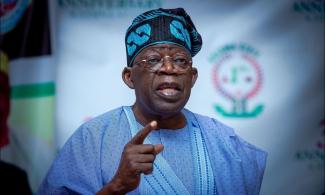
Onanuga said the Federal Government should not be held responsible for multidimensional poverty, arguing that states and local councils are directly responsible for providing access to essential services.
The Presidency under President Bola Ahmed Tinubu has shifted responsibility for Nigeria’s staggering poverty rate to state governments and the 774 local government councils, declaring that they, not the Federal Government, should be blamed for the 133 million Nigerians classified as multidimensionally poor.
The Special Adviser to the President on Information and Strategy, Bayo Onanuga, made the controversial statement on Wednesday via his verified X (formerly Twitter) handle, insisting that subnational governments are constitutionally empowered to provide the basic amenities required to lift citizens out of poverty.
Onanuga said the Federal Government should not be held responsible for multidimensional poverty, arguing that states and local councils are directly responsible for providing access to essential services.
“Who should be blamed for the 133m Nigerians, multidimensionally poor? The Federal Government? No. The states? Yes. The 774 local councils? Yes,” Onanuga wrote.
“They are constitutionally empowered to provide all the facilities that will take our people out of that crushing poverty bracket. Not the Federal Government,” he added.
Meanwhile, Prince Clement Agba, former Minister of State for Budget and National Planning, also defended the position that multidimensional poverty in Nigeria is largely a consequence of failures at the state and local government levels.
Agba made the remarks during a presentation at a public policy forum, where he spoke extensively on poverty statistics, governance responsibility, and national development planning.
Agba said he was compelled to address what he described as widespread misconceptions about Nigeria’s poverty figures, particularly the often-cited figure of 133 million multidimensionally poor Nigerians.
“Well let me use this opportunity to speak on a couple of things that Nigerians have been talking about, issues of poverty and the misconceptions that have been around it,” he said.
“I released the survey information that showed that multi-dimensionally, 133 million Nigerians are poor. And that has been misrepresented.”
According to him, there is a clear distinction between financial poverty and multidimensional poverty.
“Financially, 69.5 million Nigerians are poor, living below the $2 a day premise. But multi-dimensionally, 133 million Nigerians are poor,” Agba explained.
He argued that the Federal Government cannot be blamed for multidimensional poverty because the factors used to measure it fall largely within the constitutional responsibilities of state and local governments.
“So who's responsible for this? Is it the federal government of Nigeria? Is it the state government? The local government?” he asked.
“And the truth from what the survey showed, the federal government has nothing to do with multi-dimensional poverty.”
He added, “I’ve seen a lot of people talk about this, that Buhari has increased the number of poor people in Nigeria, or President Tinubu has done so. It has nothing whatsoever.”
Agba explained that multidimensional poverty measures lack of access to essential services rather than income alone.
“What is multidimensional poverty? Multidimensional poverty addresses lack of access,” he said.
“Lack of access to some basic things. Lack of access to basic education. Lack of access to basic health. Lack of access to potable drinking water. Lack of access to sanitation.”
He then questioned which level of government is constitutionally responsible for these services.
“And who in our Constitution is responsible for these things that I have spoken about? Basic education, who is responsible? The sub-national government,” he said.
“Who’s responsible for basic health? Sub-national government. Who’s responsible for providing potable drinking water? Sub-national government. Who’s responsible for sanitation? Sub-national government.”
“So why are we blaming the federal government of Nigeria?” he queried.
He emphasiSed that Nigeria operates a federal system with shared responsibilities across three tiers of government.
“We run the Federation. And there are three chairs: the federal government, the state government, and then the local government,” he said.
Agba also criticised state governors for concentrating development projects in state capitals while neglecting rural communities and local governments.
“This is because, like I've always said, our governors, when they need the office, they remember their entire state. They go around and campaign,” he said.
“But once they win, they put 80% or so of the resources to the state capitals.”
He said this imbalance has contributed significantly to multidimensional poverty in rural areas.
“We forget the communities, we forget the local government,” Agba stated.
“Rather than state governments and local governments to build primary health care centres, they concentrate on tertiary health care. That's not their responsibility.”
He illustrated how lack of access to basic services defines multidimensional poverty, regardless of income.
“If you have all the money in the world and you go to your community, and you fall ill at night of about 11 p.m. and you need to go to the hospital, and there is no one available, you are multi-dimensionally poor, even if you have ten million dollars in your pocket,” he said.
“If you decided to relocate to your local community with your family, and you need your children to go to school, and they have to go 10 kilometres or 20 kilometres to get to a school, you are multi-dimensionally poor.”