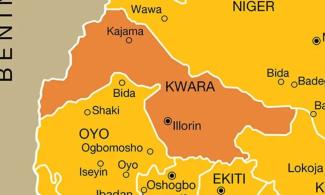
At least 162 people were killed in the late Tuesday night assault by suspected jihadist gunmen, according to the Red Cross, while the search for more bodies continues. Dozens of others were injured, and at least 38 people, mostly women and children, were abducted, local officials said.
A heavy silence hangs over Woro, a small Muslim-majority village in west-central Nigeria, where charred homes, burned vehicles and shallow graves now mark the aftermath of one of the deadliest attacks in the country in recent months.
At least 162 people were killed in the late Tuesday night assault by suspected jihadist gunmen, according to the Red Cross, while the search for more bodies continues. Dozens of others were injured, and at least 38 people, mostly women and children, were abducted, local officials said.
Among the survivors is Salihu, the traditional chief of Woro, whose voice trembles as he recounts how the attackers stormed his community, killing two of his sons and kidnapping his wife and three daughters.
“Around 5:00 pm, the gunmen just came in and started shooting,” Salihu told AFP on Thursday, clutching his Muslim prayer beads.
He said shops along the main road were set ablaze, while residents were trapped inside burning homes.
“All those shops that are within the road, they burnt them… Some people have been burned inside their houses,” he said.
Salihu said he survived by hiding inside a house before fleeing to the neighbouring town of Kaiama. The violence, he added, continued into the early hours of the morning.
“The attack lasted until 3:00 am,” he added. “When the day breaks, the corpses we see, it’s too much.”
According to the outlet, a visit on Thursday, showed that the village was almost entirely deserted. It reported that only a handful of men were seen combing through debris, searching for bodies and burying the dead. Entire neighbourhoods had been reduced to piles of ash and rubble, and the remains of burned-out vehicles littered the dirt roads.
For many families, the pain is overwhelming.
Sixty-year-old resident Muhammed Abdulkarim said he was standing by the roadside when he saw a group of men approaching in what looked like military uniforms.
“Then I realised they were bandits,” he recounted.
According to him, the attackers chased residents, seized them and tied their hands behind their backs before killing them.
“We just hear, pa-pa-pa-pa-pa-pa-pa-pa. They are shooting them (in) their heads,” Abdulkarim said.
He lost 12 family members in the attack. His two-year-old son was also abducted.
Woro, home to several thousand people, lies near a forested area long known as a hideout for armed gangs and jihadist fighters. Although the village is Muslim, residents say they reject extremist ideology.
“People don’t want to follow their ideology,” Salihu revealed.
He said he had previously alerted local security services about suspicious movements around the community.
“I think that is what brought the anger to come and just kill people like that in the community,” he said.
While Kwara State Governor AbdulRahman AbdulRazaq placed the death toll at 75, residents insist the number is far higher, with many saying more than 165 bodies have already been buried.
President Bola Tinubu condemned what he described as a “beastly attack,” announcing the deployment of an army battalion to the area. He blamed the assault on Boko Haram, a name often used broadly to describe jihadist groups operating in Nigeria.
Violence linked to bandit gangs and jihadist factions has been spreading southwards into parts of central Nigeria, including Kwara State. In October 2025, the Al-Qaeda-linked Group for the Support of Islam and Muslims (JNIM) claimed its first attack on Nigerian soil in the state, near Woro.
United Nations Secretary-General António Guterres described the massacre as a “terrorist attack” and called for those responsible to be brought to justice.
For survivors, however, justice feels distant as they mourn loved ones and search for missing relatives.
Standing amid the ruins of his village, Salihu said his people are left with little but grief.
“We have lost our children, our wives, our homes,” he said quietly. “We don’t deserve this suffering.”